
Luxury Obsession
Ferrari 458 Italia: engineering, history and character
Discover the Ferrari 458 Italia: Pininfarina design, a 570 CV V8, its history and the differences from the Spider and Speciale.
Ferrari 458 Italia: a turning point in V8 history
Introduced in 2009 as the successor to the F430, the Ferrari 458 Italia belongs to a particularly interesting moment in Ferrari history. Its name combines the rounded 4.5-litre displacement with eight cylinders, while Italia celebrates its country of origin. It brings together the response of a naturally aspirated engine, a fast dual-clutch gearbox and sophisticated electronic chassis controls. That combination gives it a distinctive character without asking the driver to accept all the compromises of a much older sports car.
The arrival of the 488 GTB in 2015 marked the move to turbocharging in this line. The 458 family therefore represents the final naturally aspirated chapter of Ferrari's mid-engined V8 series. Calling it the last naturally aspirated Ferrari of any kind would be inaccurate. Its significance lies in this specific lineage, and in the way the next generation changed the relationship between engine speed, torque and driver involvement.
Pininfarina design: proportion with purpose
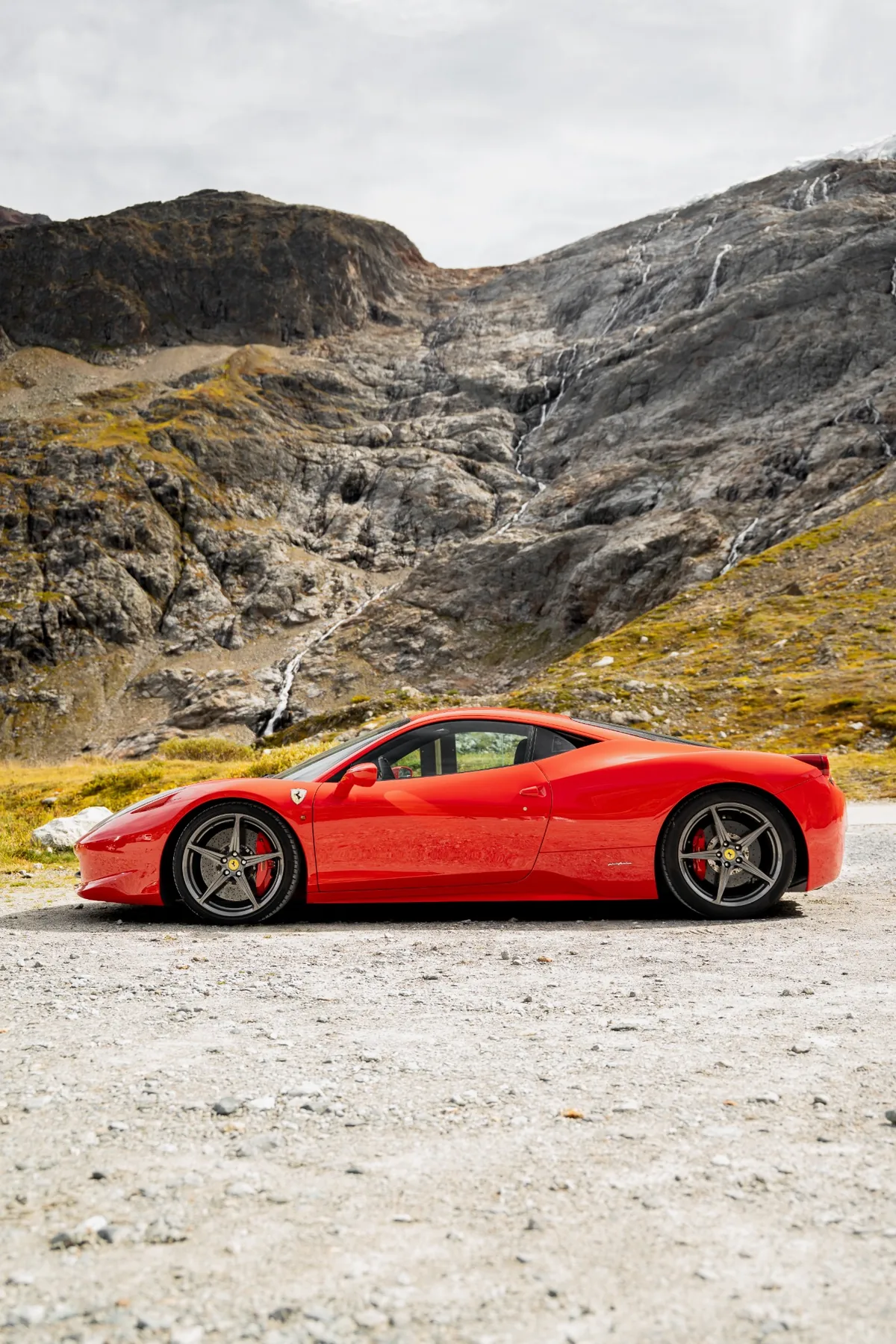
Developed with Pininfarina, the Italia's shape combines a low nose, a compact cabin and broad rear shoulders. Long headlights trace the front wings, while three central exhaust outlets make the rear instantly recognisable. Airflow and cooling requirements help define the surfaces, but the whole car remains coherent. It can look elegant from the side and purposeful from behind without relying on a collection of aggressive details.
For us, that balance explains why the design continues to work so well. The view changes as you walk around it: the height of the cabin, the position of the engine and the width of the rear all become clearer. Rosso Corsa highlights the contours, while darker paint brings different surfaces into focus. Against a Swiss lake or mountain backdrop, the car needs little extra staging. Its proportions already provide the visual interest.
The 570 CV V8: an engine defined by revs
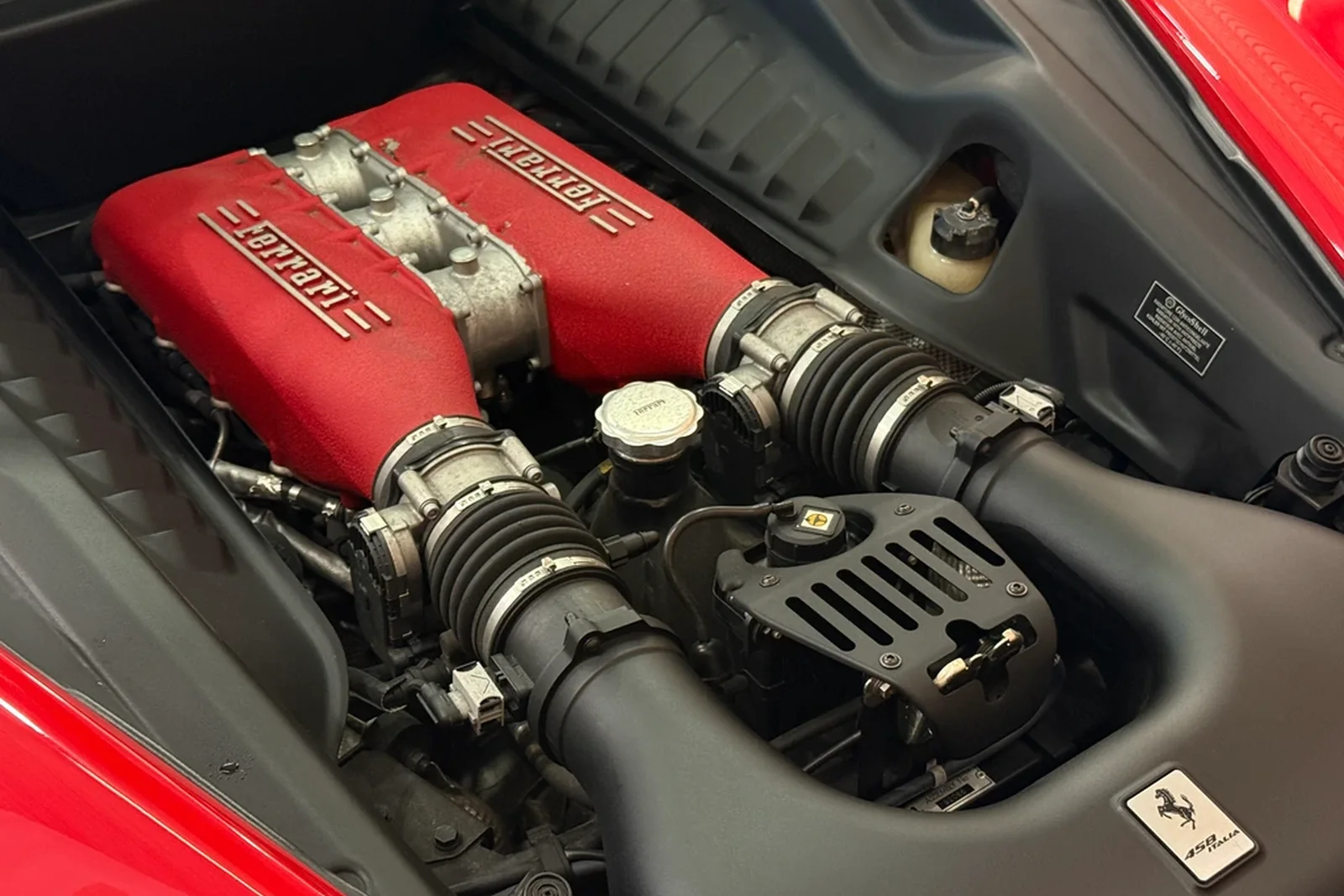
Behind the seats sits a 4,497 cc naturally aspirated V8, producing 570 CV at 9,000 rpm and 540 Nm at 6,000 rpm. Ferrari's metric horsepower figure corresponds to approximately 562 bhp. Naturally aspirated means that the engine does not use turbochargers to compress the incoming air. Its delivery encourages the driver to pay attention to revs, throttle position and the selected gear rather than relying only on a large surge of low-speed torque.
The sound changes as the revs rise, developing from a present V8 note into a higher, more intense voice. That progression is central to the Italia's appeal. The exhaust specification matters too: our Ferrari has a Capristo valve exhaust, so recordings of our car should not be treated as representative of every standard 458. Road conditions, microphone placement and valve operation can all influence what you hear.
Ferrari quoted less than 3.4 seconds from 0 to 100 km/h and a top speed above 325 km/h. Those figures describe the engineering capability. On a public-road drive, the interest lies in feeling the response of the engine and controls at a speed appropriate to the road, visibility and traffic.
Ferrari 458 Italia specifications
| Specification | 458 Italia |
|---|---|
| Engine | 4,497 cc naturally aspirated V8, mid-mounted |
| Power | 570 CV at 9,000 rpm, approximately 562 bhp |
| Torque | 540 Nm at 6,000 rpm |
| Transmission | Seven-speed dual-clutch, rear-wheel drive |
| 0–100 km/h | Under 3.4 seconds, manufacturer figure |
| Top speed | Over 325 km/h, manufacturer figure |
| Body | Two-seat coupé |
Seven-speed dual-clutch gearbox
The Italia uses a seven-speed dual-clutch transmission rather than a traditional manual gearbox. You can select gears with the steering-wheel paddles or let the automatic mode handle shifts. That choice is useful when getting acquainted with the car: first learn its dimensions and controls, then explore the manual operation once you feel comfortable.
Fast shifts suit the engine's appetite for revs, helping maintain the flow between acceleration and the next bend. Choosing a gear still forms part of the experience even though there is no clutch pedal. The Manettino changes the calibration of several systems, but a rental drive is not an invitation to experiment with every setting. The handover explains the appropriate controls and how to use them for the conditions.
Italia, Spider and Speciale: different priorities
The 458 Italia is the original closed-roof version. Its 570 CV engine, focused cabin and usable comfort make it an appealing companion for a drive with varied roads and regular stops. The word standard does not mean basic; it simply distinguishes this model from the more specialised versions in the family.
Introduced in 2011, the 458 Spider adds a retractable hardtop while retaining 570 CV. Opening the roof changes the atmosphere, bringing the landscape, temperature and engine sound closer. The roof mechanism and rear body structure differ from the coupé, so the Spider is a distinct body variant rather than merely an Italia with the roof removed.
The 458 Speciale, introduced in 2013, increases output to 605 CV and places greater emphasis on weight reduction, aerodynamics and chassis performance. That focus does not automatically make it the right choice for every journey. Someone planning a relaxed day with changing roads may prefer the Italia's balance. These variants should also be kept separate when comparing advertised prices.
Carbon interior and a driver-focused cockpit
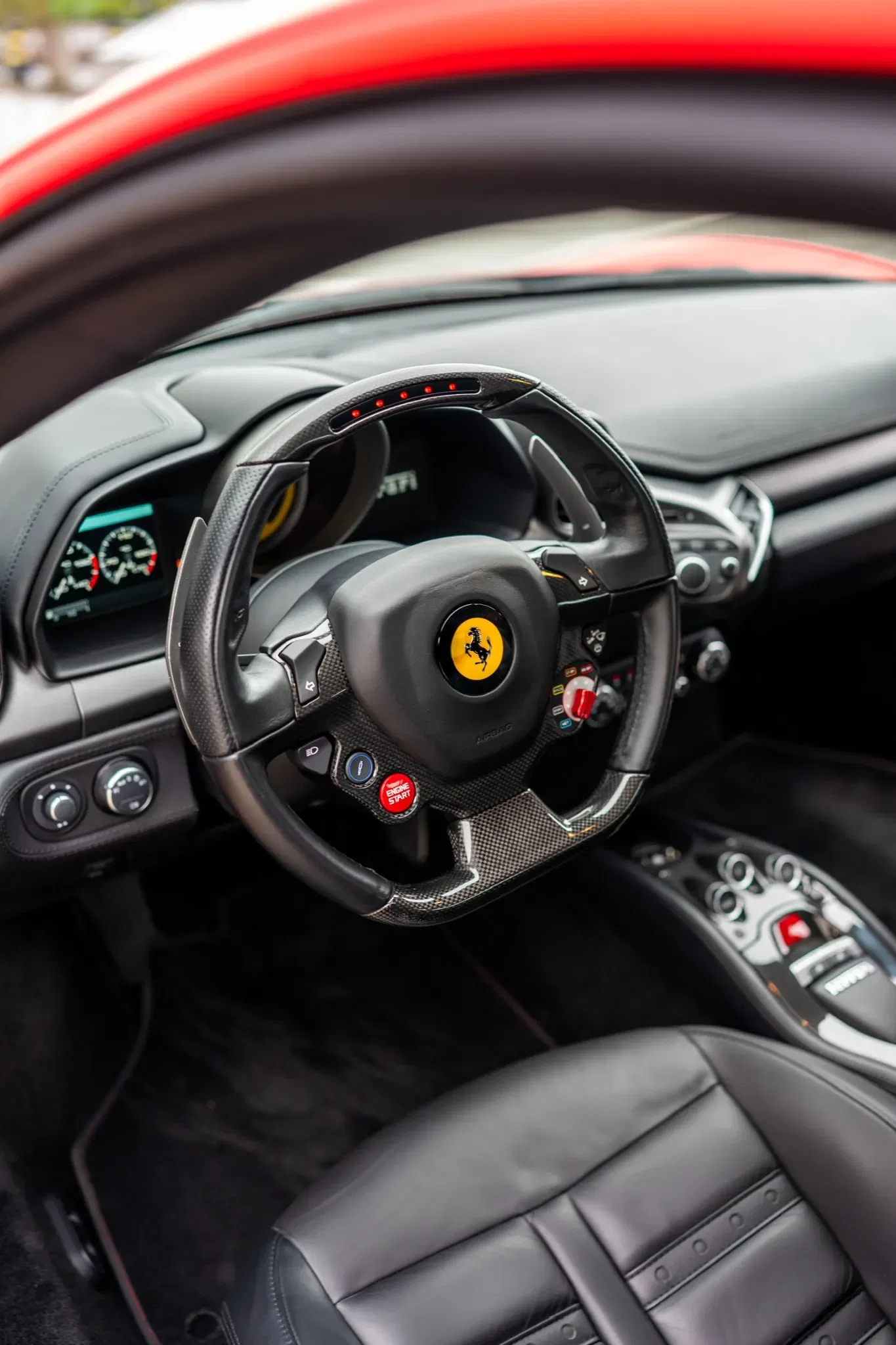
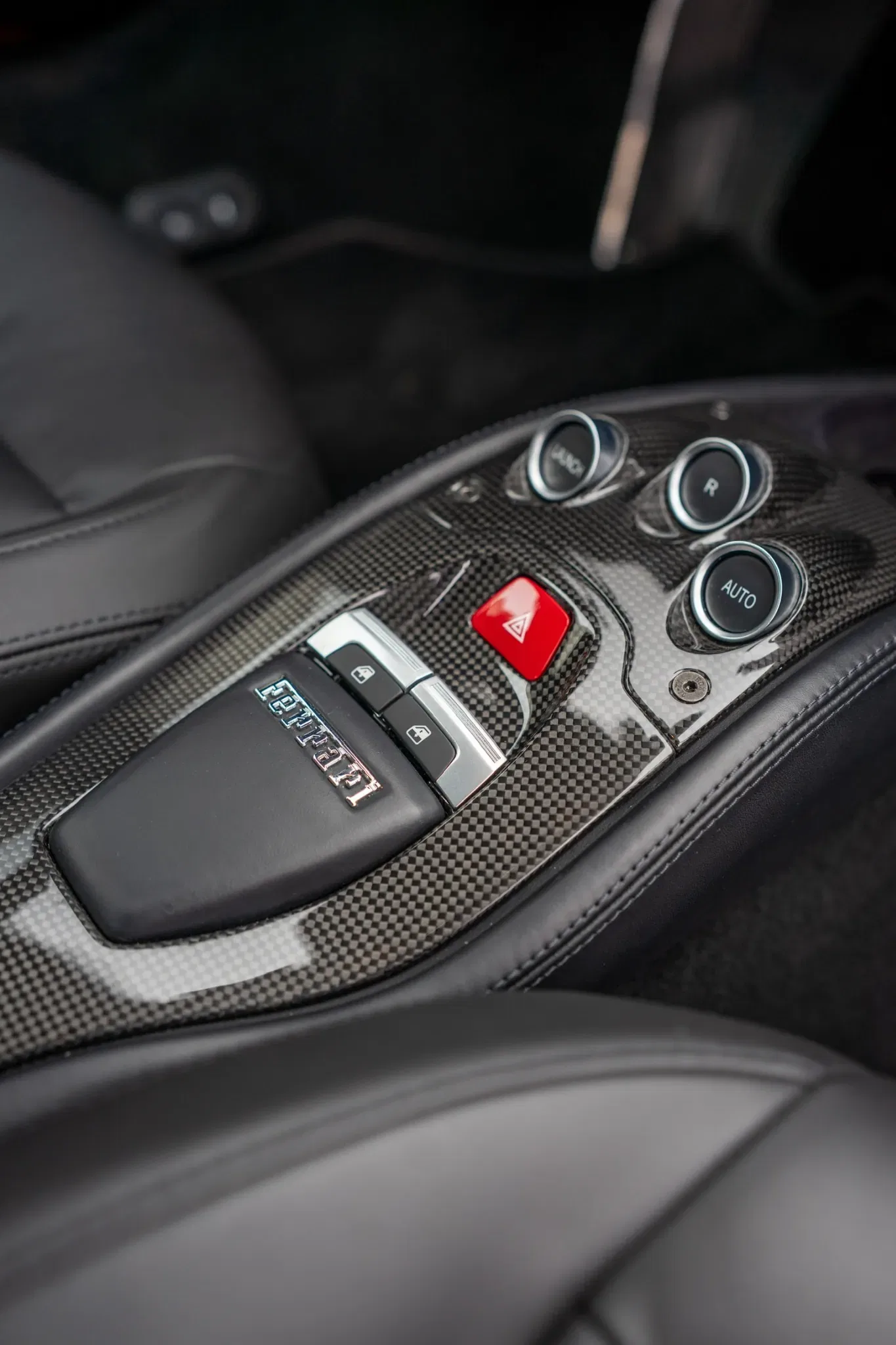
Carbon trim and controls in our Ferrari 458 Italia.
The large rev counter sits directly in front of the driver, with many functions concentrated around the steering wheel. The layout makes the car's priorities clear, but it still takes a little familiarisation. Indicators, transmission controls and switches may be in different places from those in your everyday car.
Carbon trim varies between individual examples. Seats, steering wheels and decorative surfaces depend on the original specification, so photographs of one car do not establish the equipment of every Italia. Our 2011 Ferrari combines Rosso Corsa with a black interior, carbon details and LED shift lights on the steering wheel. Well-maintained surfaces and a consistent overall condition matter just as much as an attractive options list. Our article on carbon and materials explores that aspect further.
Collector appeal and the importance of condition
The 458 attracts interest because of its design, engine and place in Ferrari history. Those qualities do not guarantee rising values. An appealing model can still carry substantial maintenance costs, and an ambitious advertised price is not evidence of a completed sale. Each individual car needs to be assessed on its own merits.
Mileage, maintenance records, documented work, accident history and specification all matter. A carefully maintained Italia with a clear history should not be compared casually with a similar-looking example that has gaps in its records. Our Swiss 458 and 488 price analysis discusses asking prices, with the limits that implies. It is background reading, not a live valuation of a particular car.
Why the Italia is more than its numbers
The appeal comes from the interaction of the details: the view over the front wings, a measured steering input, a deliberate gear change and the engine behind you. A good route and enough time for pauses often make those qualities easier to appreciate than a crowded itinerary. Before a first drive, ask about the actual vehicle, its equipment and its condition as well as the model name.
Our 458 experience article describes how those qualities come together on a Swiss outing. The 458 versus 488 comparison explains the next generation, while our alpine route guide helps turn an idea into a realistic journey.
Experience the Ferrari 458 Italia
Our Ferrari 458 Italia rental page introduces the actual car, its character and what to expect behind the wheel.
To drive our car, visit the Ferrari rental homepage for packages and a personal enquiry. We discuss your dates, rental duration and route, then introduce the Ferrari before you set off.
Request your 458 driveTechnical sources: Ferrari's 458 Italia, 458 Spider and 458 Speciale model pages. Driving impressions: Luxury Obsession.