
The Ferrari 488 GTB is faster than the Ferrari 458 Italia. That is the easy part of this comparison. The more interesting question is whether its extra performance makes it the Ferrari you would rather spend a day driving.
Our choice is the 458 Italia. For the experience we value, its naturally aspirated engine, rising soundtrack and flowing Pininfarina design matter more than the 488’s additional speed. We rent the 458, so our preference is explicit. What follows explains it through specifications, visual differences and the qualities we would prioritise when choosing a Ferrari for Switzerland.
Choose the 488 GTB if stronger acceleration, substantial turbocharged torque and more advanced chassis controls are your priorities. Choose the 458 Italia if you want a Ferrari built around the pleasure of engine response, revs and sound. For us, the 488’s technical progress does not outweigh what the 458 already gets so right.
Ferrari 458 Italia vs 488 GTB: the key differences
This comparison concerns the standard 458 Italia and 488 GTB coupés. The Spider, 458 Speciale and 488 Pista are distinct versions and should not be mixed into the same specification table.
| Specification | 458 Italia | 488 GTB |
|---|---|---|
| Engine | 4.5-litre naturally aspirated V8 | 3.9-litre twin-turbo V8 |
| Power | 570 CV / 9,000 rpm | 670 CV / 8,000 rpm |
| Maximum torque | 540 Nm / 6,000 rpm | 760 Nm / 3,000 rpm (VII) |
| Gearbox | 7-speed dual-clutch | 7-speed dual-clutch |
| Drive | Rear-wheel drive | Rear-wheel drive |
| 0–100 km/h | Under 3.4 seconds | 3.0 seconds |
| Top speed | Over 325 km/h | Over 330 km/h |
Manufacturer figures, not a road test of our rental car. CV/PS denotes metric horsepower; 570 CV is approximately 562 bhp and 670 CV approximately 661 bhp. The 488’s headline torque applies in seventh gear. Sources: Ferrari 458 documentation and Ferrari 488 specifications.
The 488 gains 100 CV, but both cars already offer a seven-speed dual-clutch gearbox and rear-wheel drive. That is an important distinction from the F430-to-458 transition: choosing the 458 here does not mean stepping back to the older single-clutch F1 transmission. Much of the modern usability is already present.
Exterior comparison: why we prefer the 458’s shape
The family resemblance is clear, yet the two cars communicate different priorities. The 458’s Pininfarina-designed body has a flowing flank and a particularly clean relationship between the cabin and rear haunches. The 488, designed by Ferrari’s own styling centre, makes its airflow management more visible through large side intakes and more assertive aerodynamic details.
Front and headlights
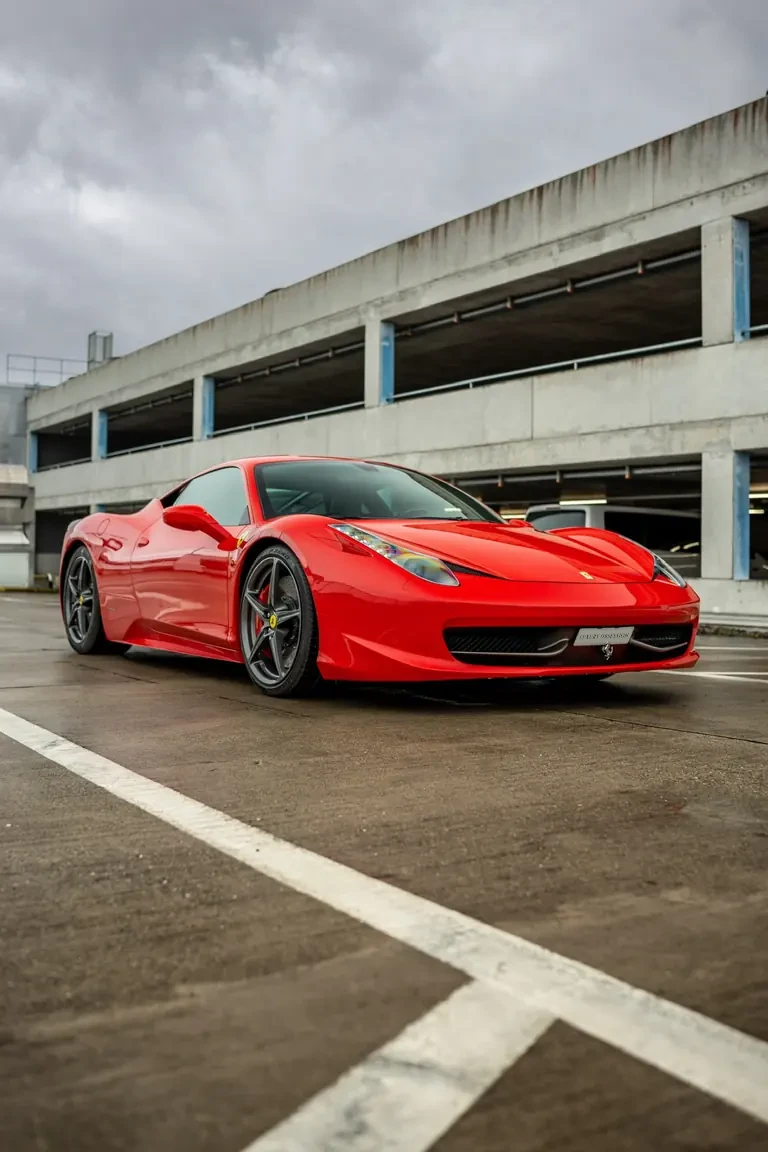
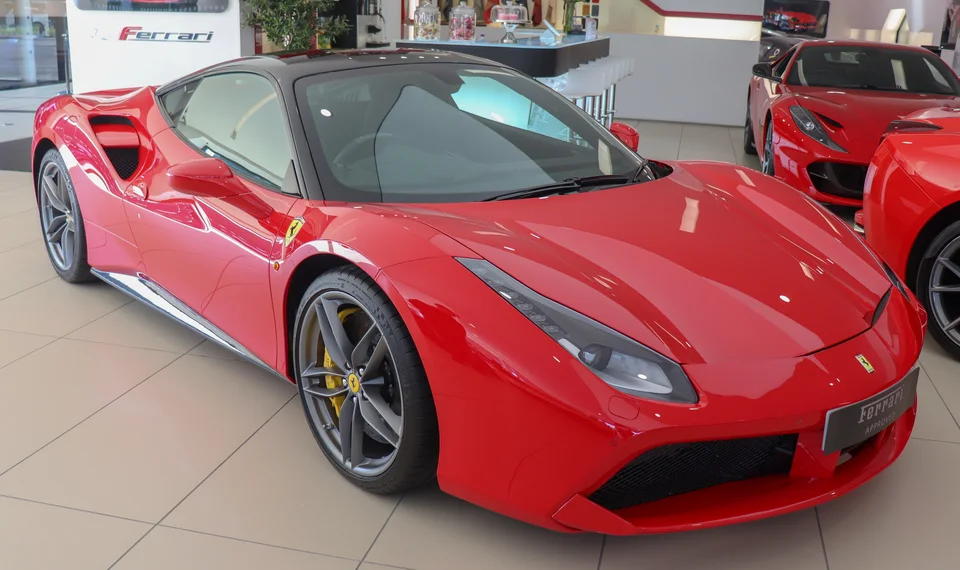
The 458’s flowing front compared with the 488’s more layered aerodynamic treatment.
Front end and headlights
Both use long, sharply drawn headlights rather than the rounder expressions of earlier Ferrari generations. The 458’s nose reads as a simpler whole to our eyes; the 488’s front spoiler and openings create a more technical, layered appearance. Neither is an accidental shape. Our preference is for the 458’s balance of elegance and aggression: it looks purposeful without needing every surface to announce its performance.
Side profile and air intakes
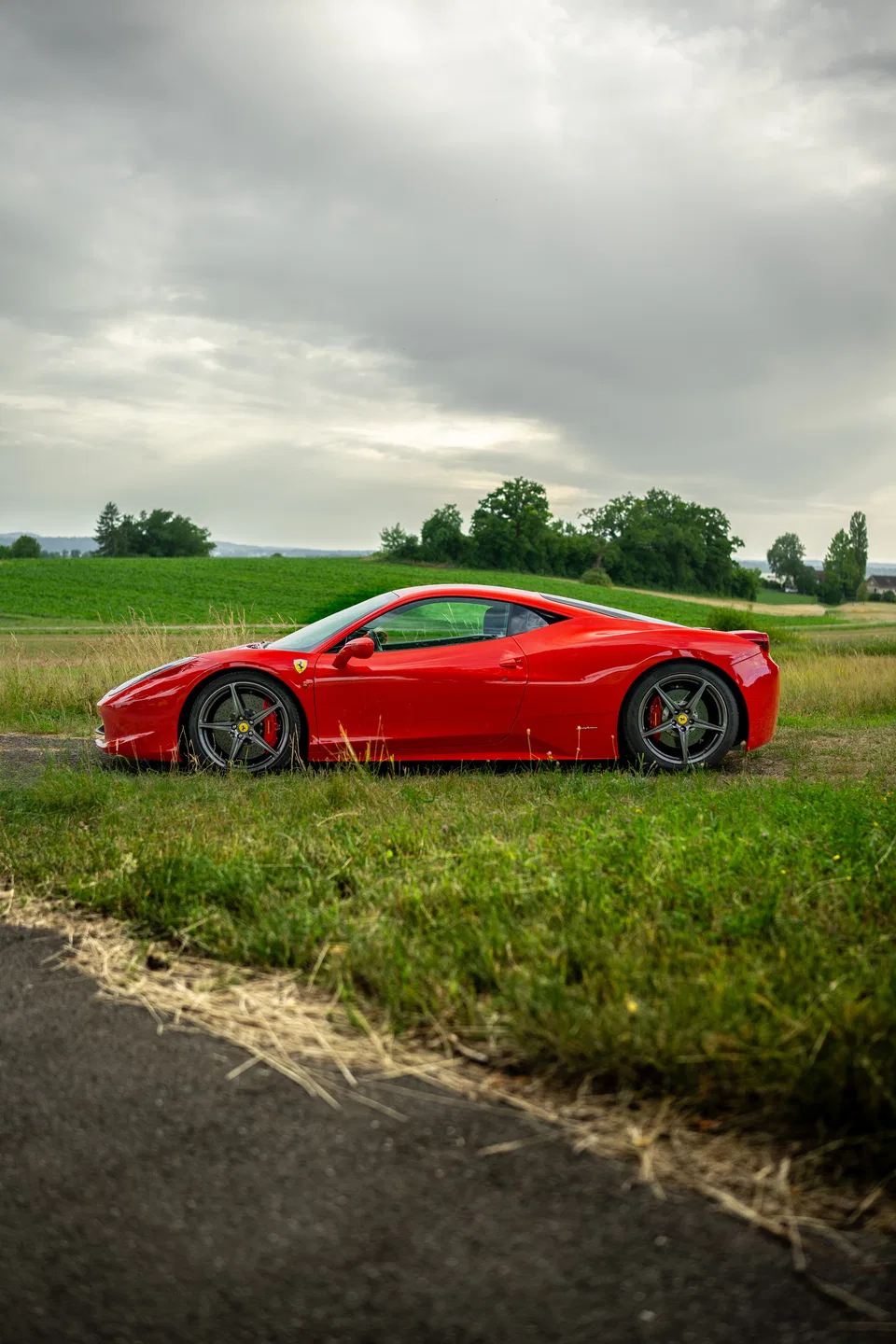
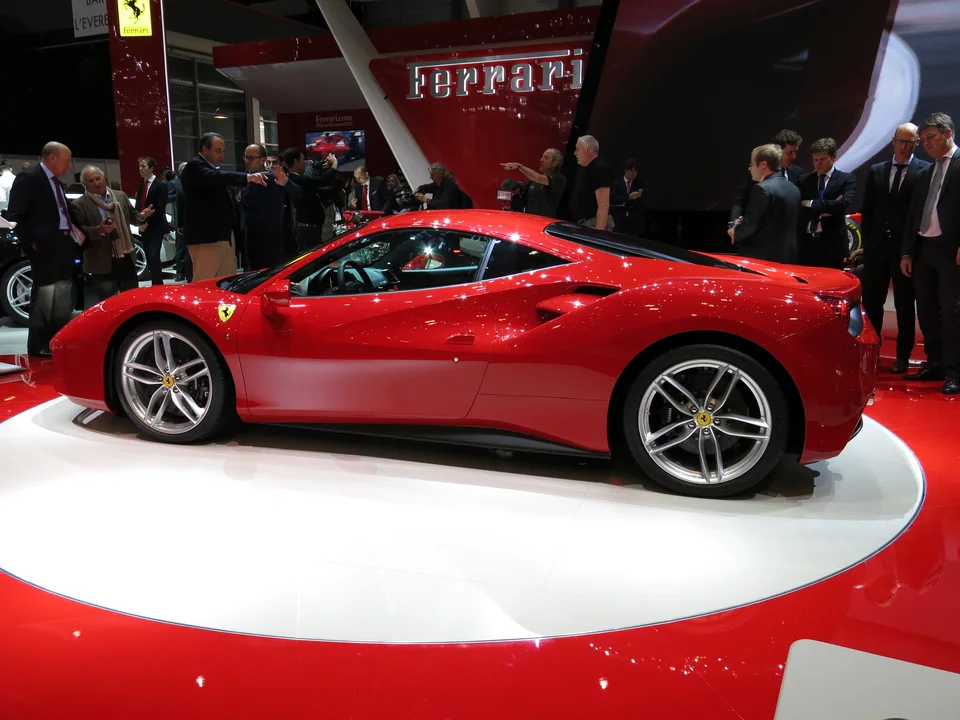
The 458’s smoother flank and the 488’s prominent divided side intake.
The side intake makes the difference obvious
Look behind the doors. The 488’s prominent divided intake is one of its clearest identifying features. The 458 keeps this area visually smoother, although it still has cooling inlets elsewhere. We find that less interrupted silhouette especially satisfying in profile. The 488’s extra sculpting has a function; whether it improves the beauty is a separate question.
Rear design and exhausts
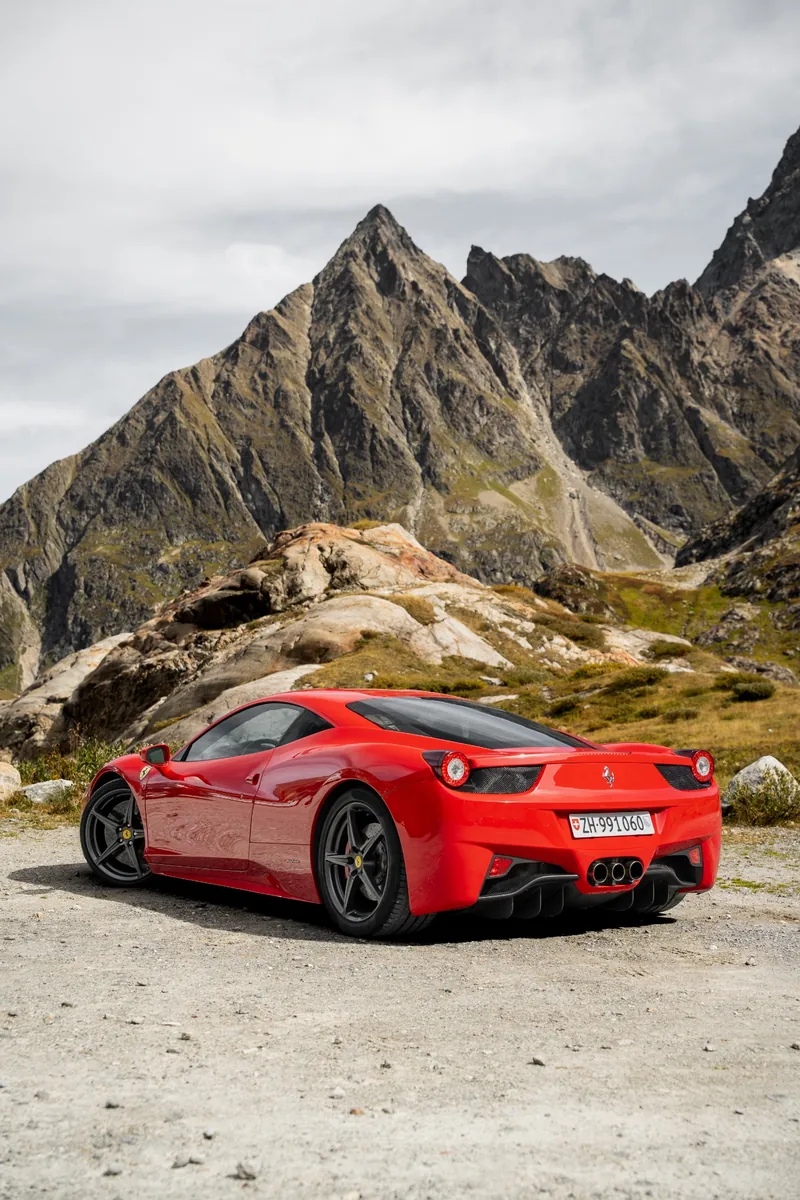
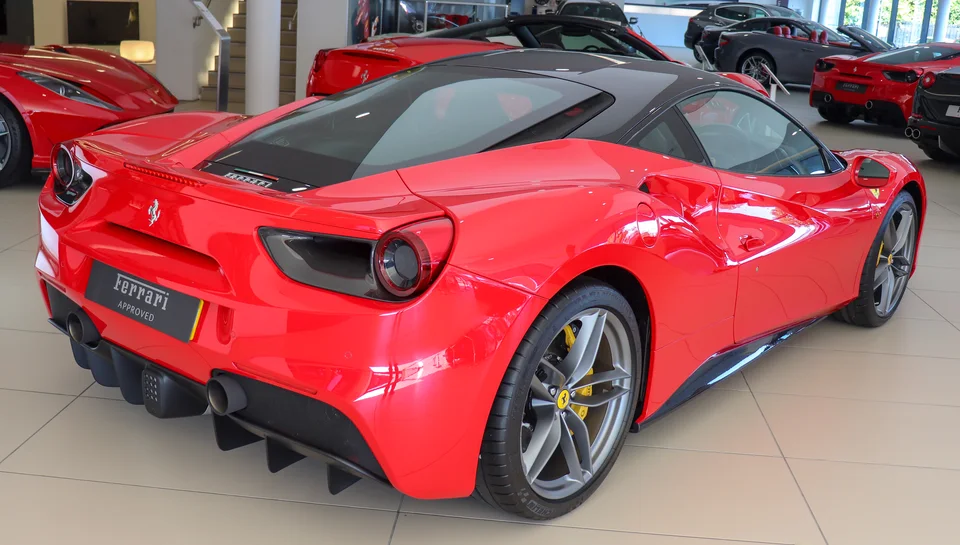
Three central exhaust outlets on the 458; two separated outlets on the 488 GTB.
458 vs 488 rear: three central exhausts or two separated outlets?
The 458 Italia’s three central exhaust outlets give the rear an unmistakable signature. The 488 GTB uses two separated outlets, with a different diffuser and aerodynamic treatment between and below them. Ferrari’s launch material explains that repositioning the exhausts allowed a taller diffuser on the 488. That is a real engineering reason for the change. Visually, we still prefer the 458’s compact, centred arrangement.
The photographs show individual cars with different wheels, trim and options. They illustrate design differences; they are not a controlled comparison of paint condition or equipment.
Naturally aspirated versus turbo: the difference you feel
The 458’s appeal begins with the way its engine builds an experience. Its 4.5-litre V8 produces peak power at 9,000 rpm. The 488’s smaller 3.9-litre twin-turbo V8 produces more power and much more peak torque, with peak power at 8,000 rpm. The figures describe two different approaches, not simply two levels of the same sensation.
In the 458, choosing a gear and letting the engine’s pitch rise are central to the pleasure. We value the connection between pedal input, engine response and changing sound. In the 488, the greater torque places more emphasis on strong acceleration without the same need to seek the upper rev range. That can be very rewarding, particularly for someone who enjoys effortless thrust.
It would be misleading to describe the 488 as a crude turbo car with a long wait before anything happens. Ferrari worked specifically on response and used Variable Torque Management to shape delivery through the gears. Our preference for the 458 does not require pretending that work failed. We simply prefer the naturally aspirated engine’s way of involving the driver.
Nor does enjoying the 458 mean chasing 9,000 rpm on a public road. Both cars can exceed legal speeds very quickly. The controls, the changing engine note and the pleasure of a well-judged gear change remain part of the experience without treating every straight as an acceleration test.
Ferrari 458 vs 488 sound: why the 458 wins for us
Sound is the strongest reason we would keep the 458. To our ears, its voice has a more expressive rise in pitch and a more exciting sense of progression. The engine does not merely accompany the drive; it gives it a character you recognise immediately. The 488 has its own muscular soundtrack, but we find it less central to the occasion.
This is a preference, not a decibel contest. Louder is not automatically better, and recordings can mislead. Microphones, exhaust valves, driving mode, temperature and aftermarket parts can all change what you hear. Compare standard cars with standard cars before attributing every difference to the model.
Our particular 458 has a Capristo valve exhaust. Its sound therefore should not be presented as the factory sound of every 458 Italia. The car’s naturally aspirated character remains the reason we chose it; the exhaust is part of this individual example’s specification.
Interior and controls: the 458 already feels like a modern Ferrari
Interior details
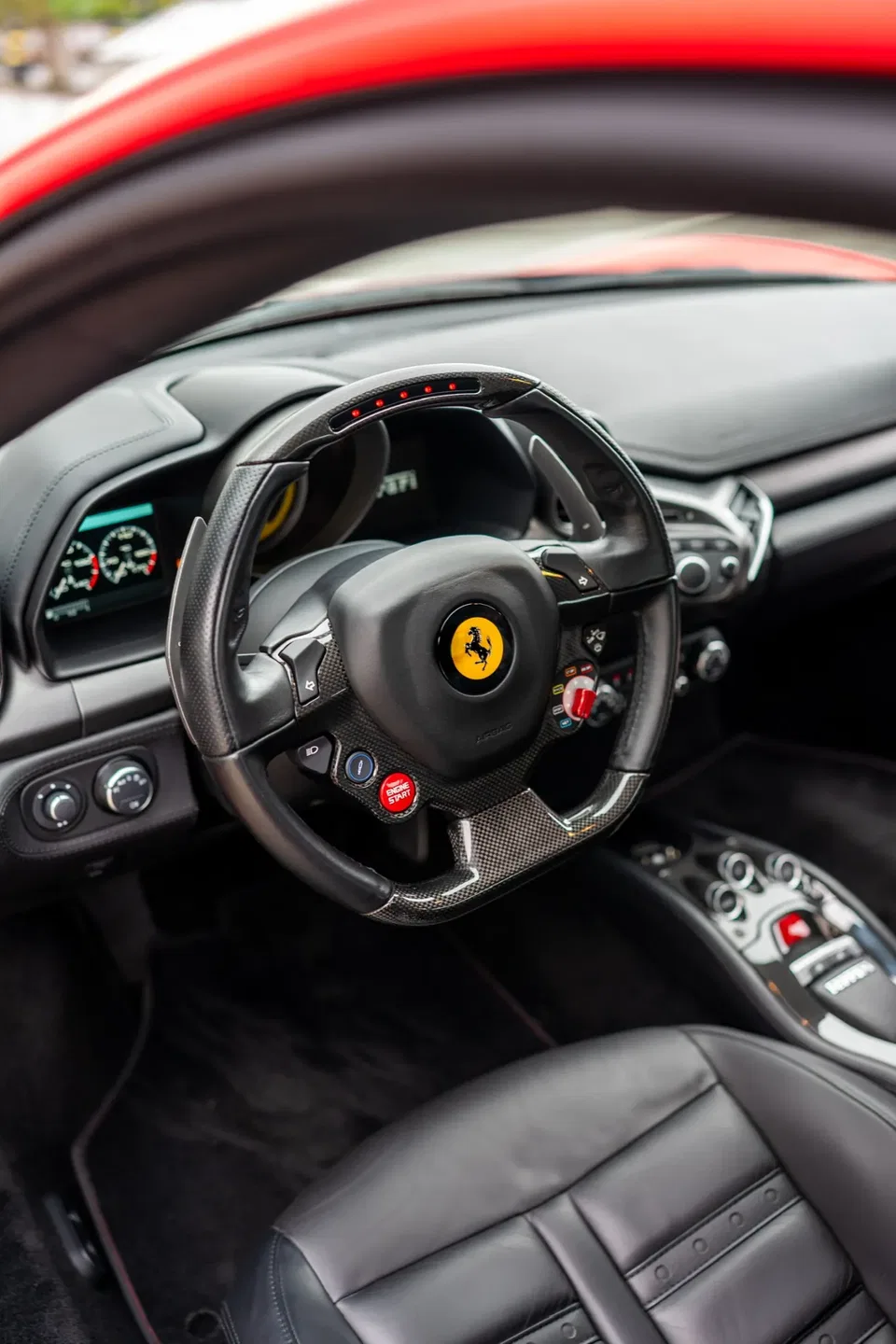
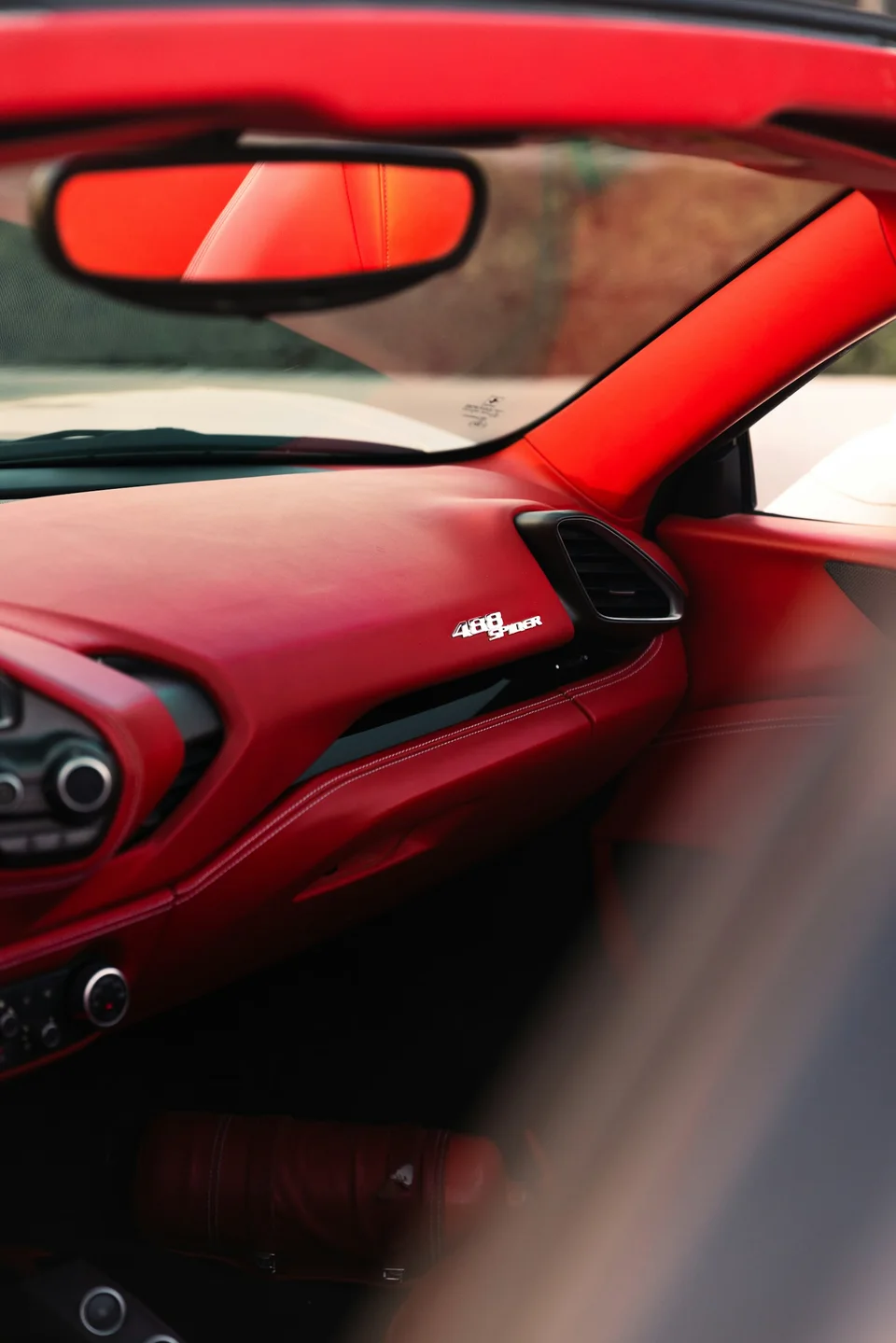
Our 458’s steering wheel and seats alongside a 488 Spider dashboard detail. The Spider photo illustrates cabin trim, not the GTB body style; specifications above compare the coupés.
The cockpit comparison is revealing because the basic idea remains close: a driver-focused instrument layout, a prominent central rev counter, steering-wheel controls and paddle shifts. The 488 refines the interface and adds conveniences such as keyless starting, but it does not turn the 458’s cabin into an obsolete place to spend a day.
For us, the 458 sits at an appealing point between tactile detail and modern convenience. The rev counter has a clear visual role, the paddles make the transmission easy to engage with, and the car’s controls feel closely connected to the driving experience. Calling that “more analogue” is a description of the atmosphere. The 458 also uses substantial electronics and driver assistance.
Equipment matters as much as the model name. Carbon-fibre trim, seat type, leather colour and steering-wheel options vary between cars. The carbon details in our photographs belong to our 458’s configuration; a different 458 or 488 may be specified differently. When choosing a rental, look at photographs of the actual car you will receive.
Do the 488’s technological advances justify the move?
The 488’s improvements are meaningful. Its aerodynamic development and evolved Side Slip Control system, SSC2, help extend its performance capabilities. Ferrari describes SSC2 as coordinating the traction control, electronic differential and active dampers. These changes deserve recognition, especially for drivers interested in exploiting the car’s dynamic potential in an appropriate setting.
For the kind of road experience we offer, they would not persuade us to exchange the 458 for a 488. We would be trading an engine character we particularly enjoy for additional capability that is not the main reason to book a scenic Ferrari day. A more advanced control system cannot, by itself, replace the sound or the naturally aspirated response that attracted us to the car.
The 458 already gives us the combination we want: a dramatic engine, rapid dual-clutch shifts and a cabin that makes every departure feel special. We see the 488 as a different choice with stronger performance, rather than a compulsory upgrade for everyone who loves the 458. A driver who values its extra torque more highly can reasonably reach the opposite conclusion.
Which would we choose for a Ferrari rental in Switzerland?
A rental day is not a lap-time contest. It includes the handover, your first few kilometres, a stop beside a lake, photographs and the return journey. The car has to make those moments feel worthwhile as well as deliver impressive acceleration. That is where our preference for the 458 becomes especially clear.
We would rather choose the engine and design we most want to experience than select the newer model automatically. If you are comparing a 458 rental with a 488 offer, consider the actual car’s condition, specification, included kilometres, handover and time available. The badge on the listing tells you the model; the full offer tells you what your day can be.
For a short booking, keep the route realistic. For a longer outing, leave room for stops and changing weather. Our scenic drives from Zurich and guide to a Ferrari experience in Switzerland can help connect the car choice with the day you want.
Keep the owner’s perspective: TheCarGuys’ 458 vs 488 video
TheCarGuys’ comparison remains part of this article because it asks the right question: would you actually prefer the newer car? Their episode brings the 488 GTB alongside Damian’s long-term 458 Italia and considers performance, sound, exterior design, interior and ownership. Both models featured in their collection at the time.
The preference for the 458 in the video is an owner’s judgment, not a universal ranking. It is a useful companion to our own view that progress in performance does not settle the question of enjoyment. Watch the discussion, listen to the cars and decide which qualities matter to you.

Watch the original video on YouTube · TheCarGuys, 2018, in English. The creators note that the performance figures in their comparison relate to their own cars. The specification table above uses manufacturer figures. This is an independent video, not an endorsement of Luxury Obsession.
458 vs 488 prices, ownership and collector appeal
“Newer” does not give you a reliable answer to which used Ferrari costs more. Body style, mileage, condition, service history and options can change the comparison considerably. A Speciale or Pista is not a substitute for a standard Italia or GTB when assessing prices.
The 458 belongs to Ferrari’s final naturally aspirated mid-engine V8 generation, which also includes the Speciale derivatives. That gives the family a distinctive place in Ferrari history and is part of its appeal to us. It does not guarantee appreciation or make every example equally desirable.
For a purchase, inspect the individual car and its history rather than treating either model as automatically trouble-free. For market context, see our Swiss 458 and 488 price analysis. For a rental, the more immediate question is simpler: which character would you most like to experience?
Our verdict: the 458 is the Ferrari we want to spend the day in
The 488 advances the performance story. The 458 preserves the qualities that make this particular Ferrari experience compelling to us: a naturally aspirated V8, an expressive soundtrack, a beautiful silhouette and enough modern usability to enjoy the whole day.
When we call it more authentic, we mean closer to our idea of a Ferrari. Turbocharging is part of Ferrari’s history too; the 488 is no less a genuine Ferrari. But for sound, involvement and design, our choice remains the 458. Its appeal is a positive reason to choose it, not a consolation for choosing the older car.
Our Ferrari 458 Italia is available from Nänikon near Zurich, with personal preparation before your rental begins. Compare rental packages, check pickup options or request your preferred date.
Ferrari 458 vs 488: frequently asked questions
What is the main difference between the Ferrari 458 and 488?
The 458 Italia has a 4.5-litre naturally aspirated V8 with 570 CV; the 488 GTB has a 3.9-litre twin-turbo V8 with 670 CV. Both have rear-wheel drive and a seven-speed dual-clutch gearbox.
Is the Ferrari 488 faster than the 458?
Yes. Ferrari quotes 0–100 km/h in 3.0 seconds for the standard 488 GTB, compared with under 3.4 seconds for the 458 Italia. These are manufacturer figures, not a test of our car.
Does the 458 sound better than the 488?
We prefer the 458’s rising, naturally aspirated soundtrack. That is subjective. Exhaust specification and recording conditions affect comparisons; our own 458 has a Capristo valve exhaust.
Is the 458 the last naturally aspirated mid-engine V8 Ferrari?
The 458 belongs to Ferrari’s final naturally aspirated mid-engine V8 generation, including the Speciale derivatives. The succeeding 488 uses turbocharging.
Does either car have a manual gearbox?
The standard 458 Italia and 488 GTB both use a seven-speed dual-clutch transmission with paddle shifts. Neither was offered with a traditional factory manual gearbox.
How can you tell a 458 from a 488?
The 488 GTB has large divided intakes behind the doors and two separated rear exhaust outlets. The 458 Italia has smoother flanks and three central exhaust outlets.
Is a 458 cheaper than a 488?
Not necessarily. Used prices depend on version, condition, mileage, service history, options and the market. Compare current equivalent examples rather than assuming newer always means more expensive.
Why choose a 458 rental in Switzerland?
We would choose the 458 for its naturally aspirated response, expressive sound and Pininfarina design. The 488 offers stronger performance, but our preference for a scenic rental day is the 458’s character.