
The Ferrari 458 Italia succeeded the F430. Both have naturally aspirated V8s, but the F430 offered a gated manual or the F1 automated manual, while every 458 Italia has a seven-speed dual-clutch gearbox.
The Ferrari 458 Italia is the stronger all-round road car in this comparison: it brings more power, quicker acceleration and a seven-speed dual-clutch gearbox while retaining a naturally aspirated V8. The F430 still has a compelling attraction, especially with its optional gated manual. The meaningful question is which kind of Ferrari experience you want.
This guide compares the standard F430 coupé and 458 Italia, rather than the Spider, 430 Scuderia or 458 Speciale. Our recommendation favours the 458 for a driving day in Switzerland; the figures below explain its technical advantages, while preferences about sound, styling and manual shifting remain personal.
Ferrari F430 vs 458 Italia: specifications
| Specification | Ferrari F430 | Ferrari 458 Italia |
|---|---|---|
| Engine | 4.3-litre naturally aspirated V8 | 4.5-litre naturally aspirated V8 |
| Maximum power | 490 CV at 8,500 rpm | 570 CV at 9,000 rpm |
| Maximum torque | 465 Nm at 5,250 rpm | 540 Nm at 6,000 rpm |
| Transmission | 6-speed manual or F1 automated manual | 7-speed F1 dual-clutch |
| 0–100 km/h | 4.0 seconds | Under 3.4 seconds |
| Driven wheels / seats | Rear wheels / 2 | Rear wheels / 2 |
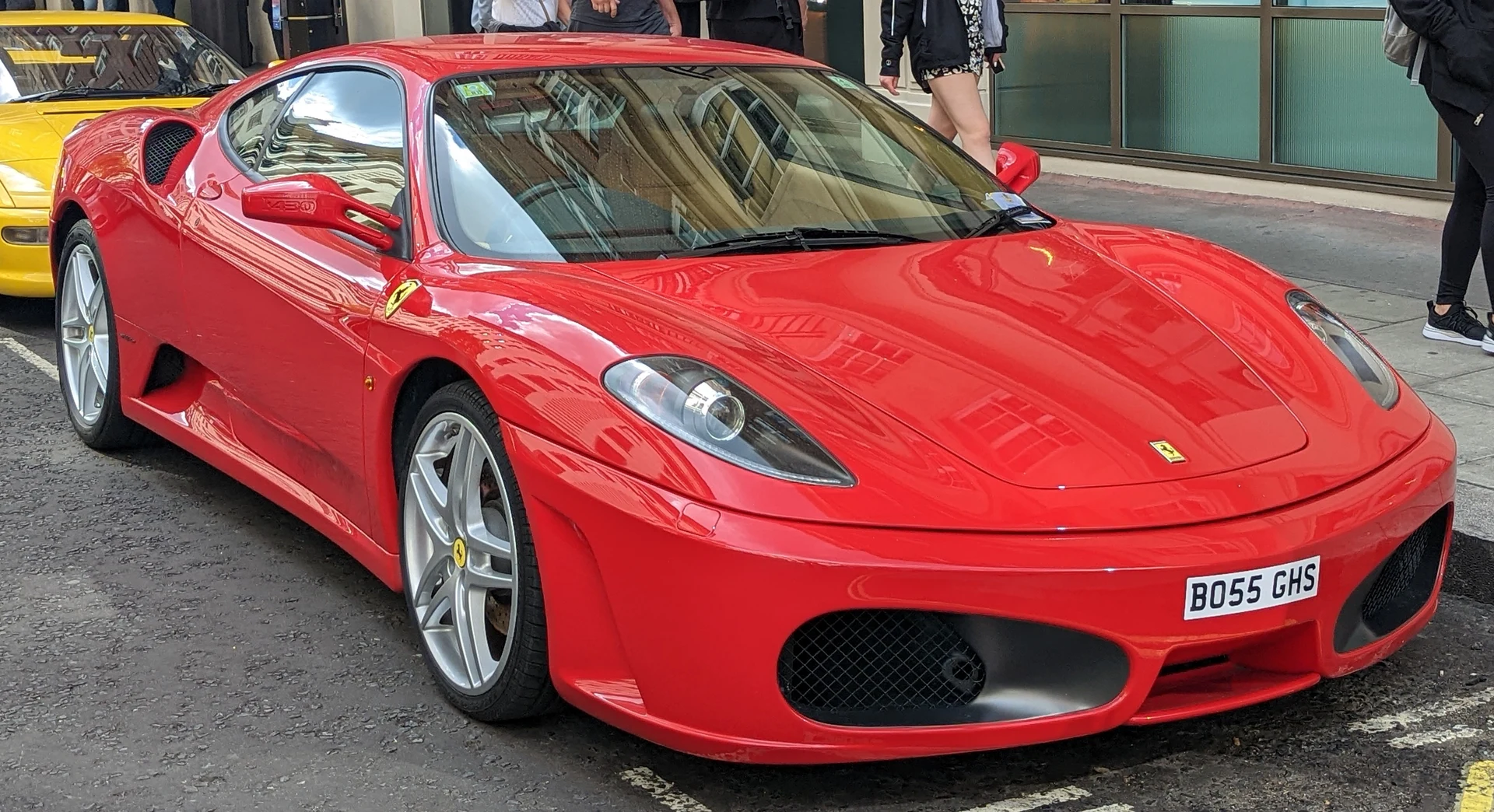
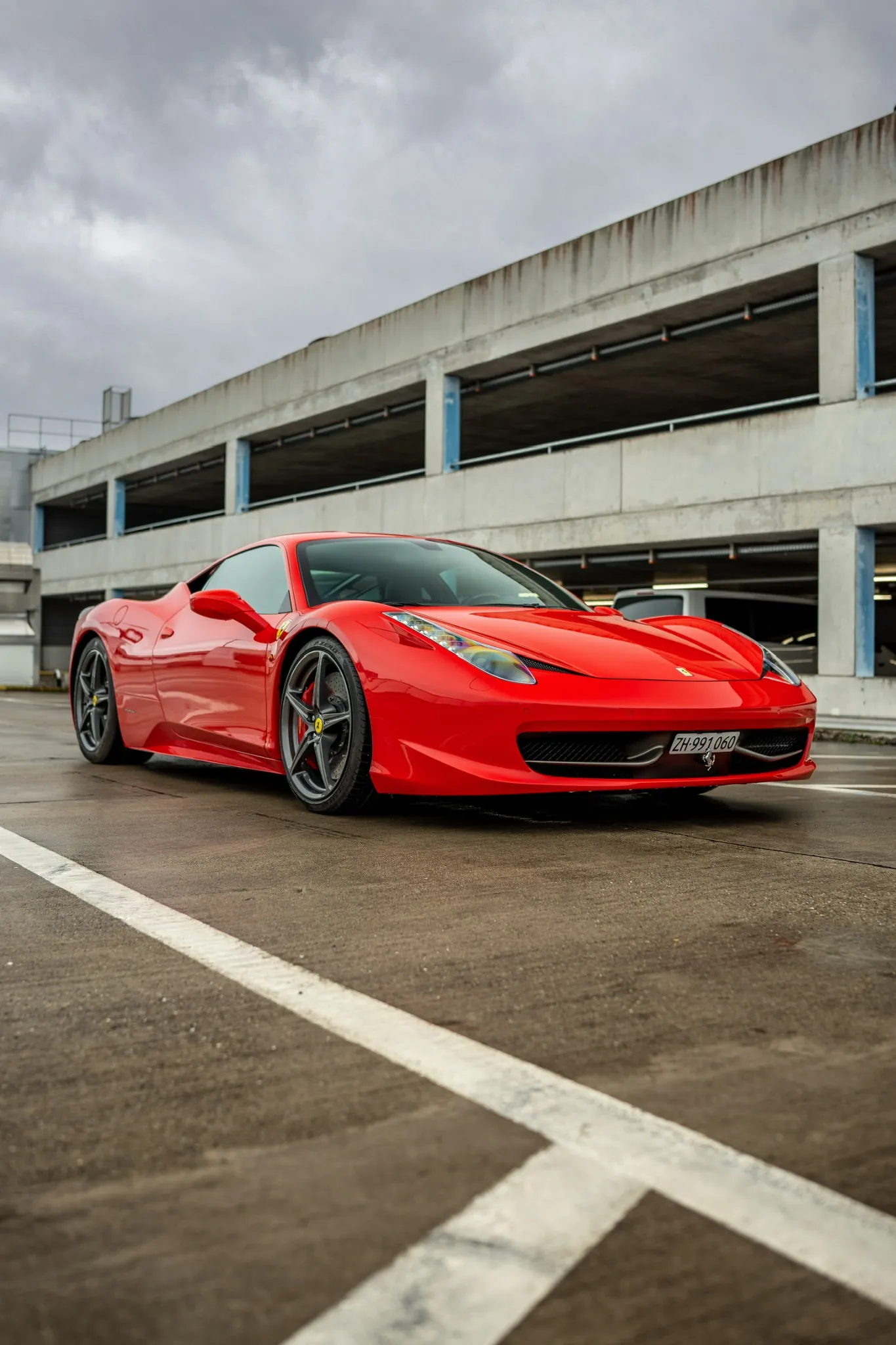
Headlights: two distinct signatures

Rear design: lights, exhausts and diffuser
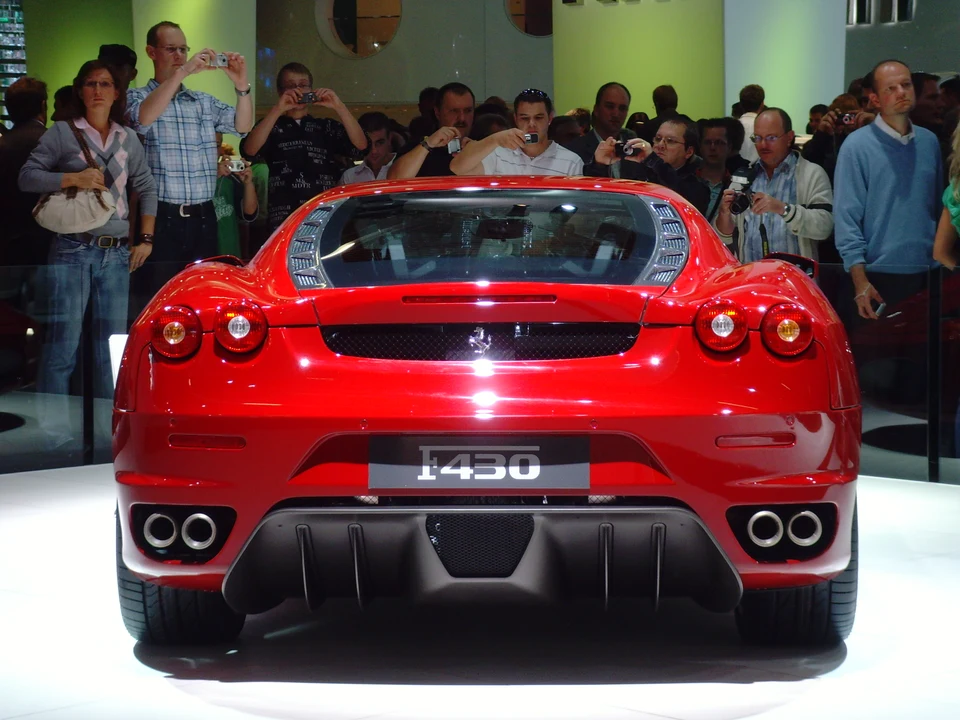

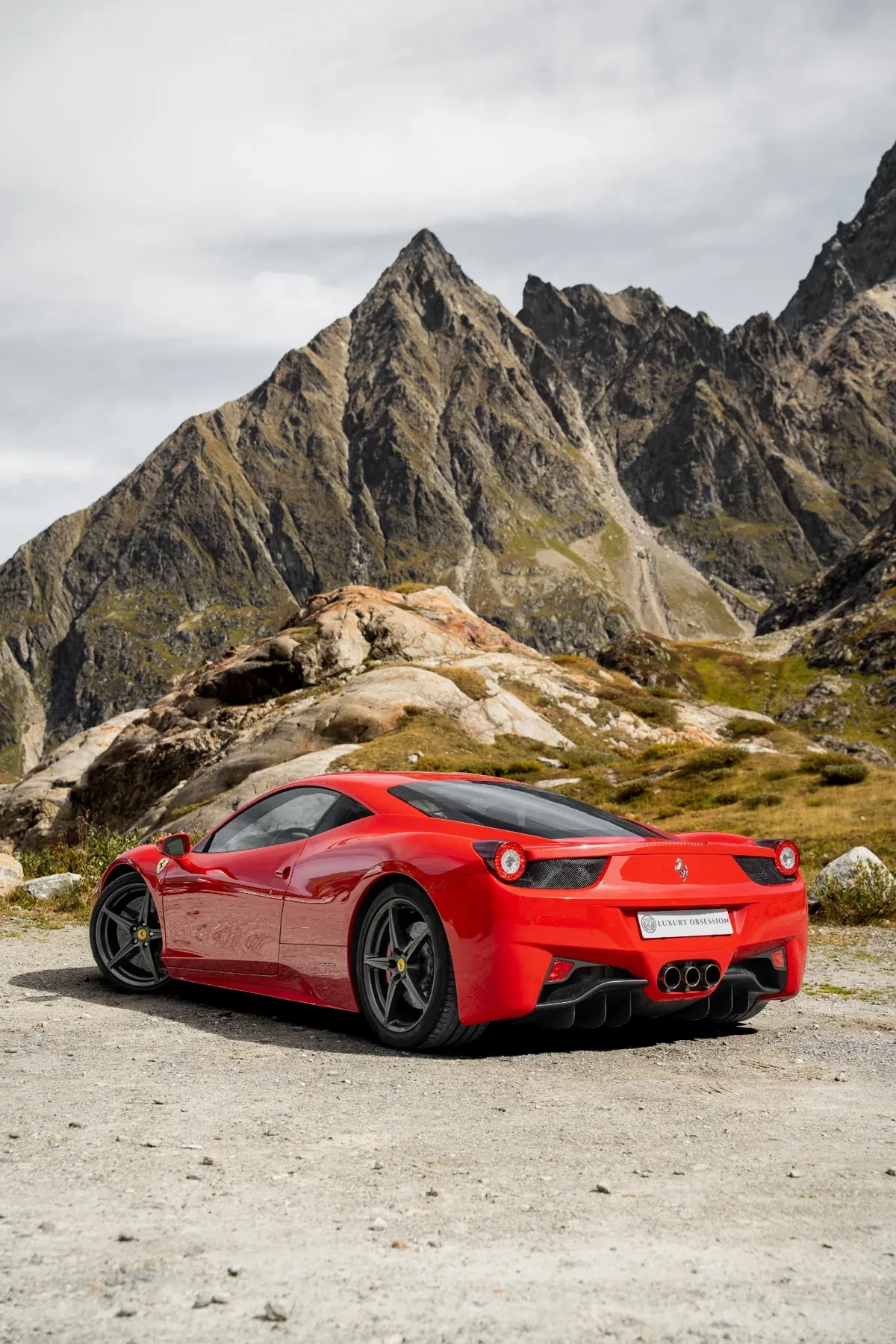
CV and PS are metric horsepower, a different unit from mechanical hp/bhp. Acceleration figures are manufacturer claims, not results from a test conducted by Luxury Obsession. Sources: Ferrari F430, Ferrari 458 Italia and Ferrari’s 458 history.
What makes the 458 a significant step forward?
The 458 has an extra 80 CV and 75 Nm. More importantly, it combines that engine with a different transmission architecture. The attraction is not simply a better acceleration number: the car lets you enjoy a high-revving V8 with quick paddle shifts and an automatic mode when the journey slows down.
That combination is the heart of our preference for the 458. A Ferrari day often includes leaving town, passing through villages and stopping for a view. An engaging car needs to work between those memorable moments too. The 458 offers a convincing balance of occasion and convenience without moving to a turbocharged engine.
Engine bay: naturally aspirated V8s
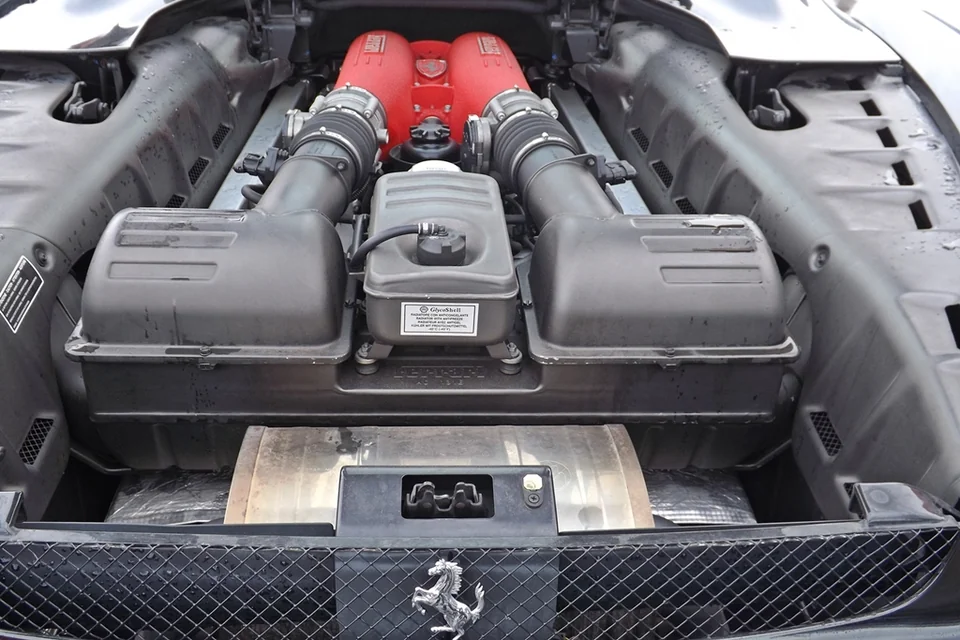

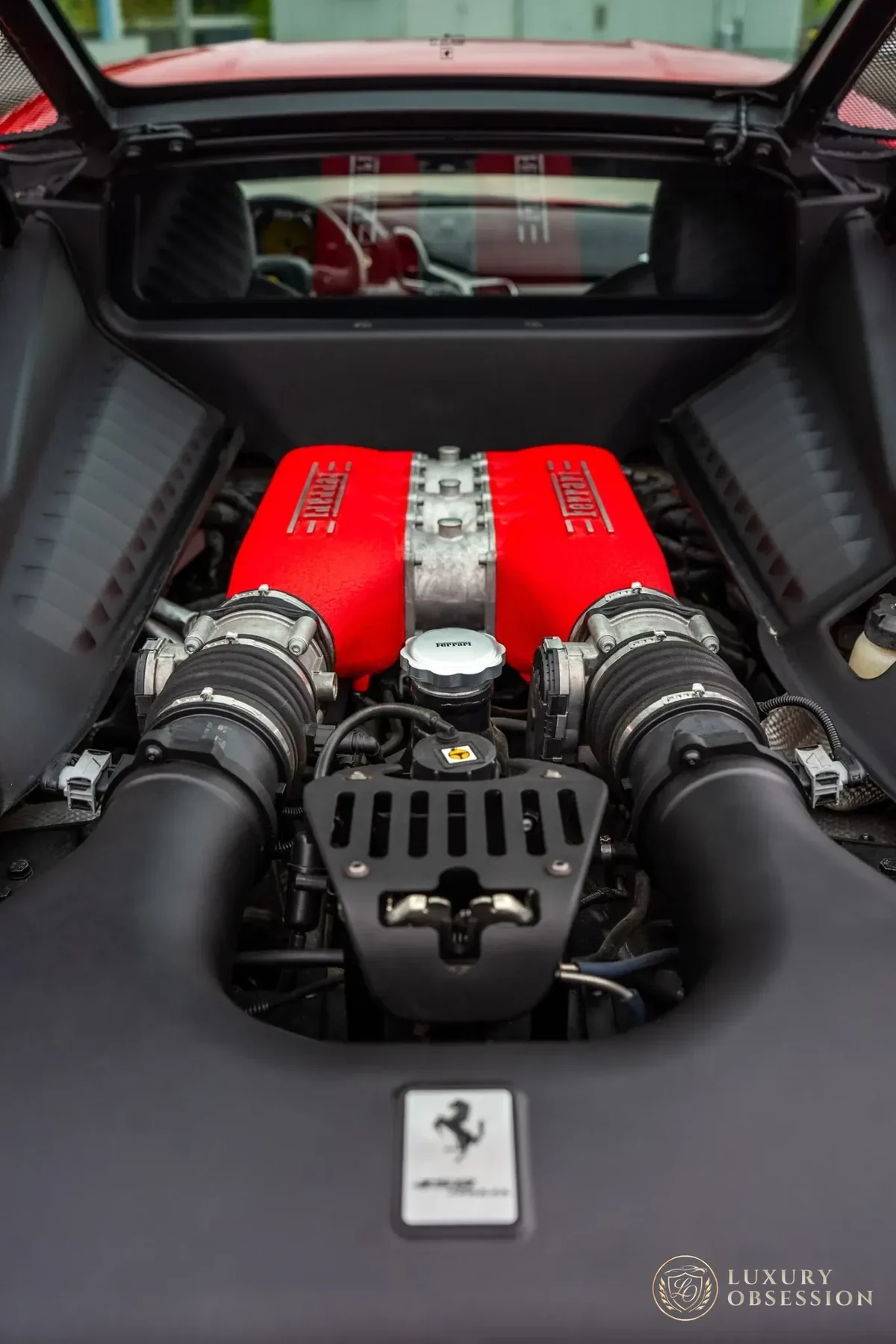
F430 manual, F430 F1 or 458 dual-clutch?
The manual F430: a different kind of pleasure
A manual F430 gives the driver a clutch pedal and an exposed metal shift gate. If choosing and engaging each gear yourself is the reason you want a Ferrari, that is a real advantage. The 458 Italia was not offered with a factory manual gearbox. A faster paddle shift cannot replace the ritual of a manual for someone who specifically wants it.
The F430 F1: paddles with a single clutch
The F1 version uses an automated manual transmission. Its paddles do not make it the same system as the 458’s gearbox: a single clutch disengages and re-engages during a change. That makes the distinction between the two paddle-shift cars more important than the shared F1 name. The F430 owner’s manual describes its six-speed gearbox and clutch system.
The 458: the more modern paddle-shift choice
A dual-clutch transmission can prepare the next gear on a separate clutch, making a more continuous delivery of power possible during shifts. For someone who wants paddles, the 458 is our clear choice. You can select gears yourself or use automatic mode, without needing to operate a clutch pedal in traffic. That is particularly useful when the car is new to you and you also want to enjoy the surroundings.
Gear selector: manual gate and carbon-fibre console
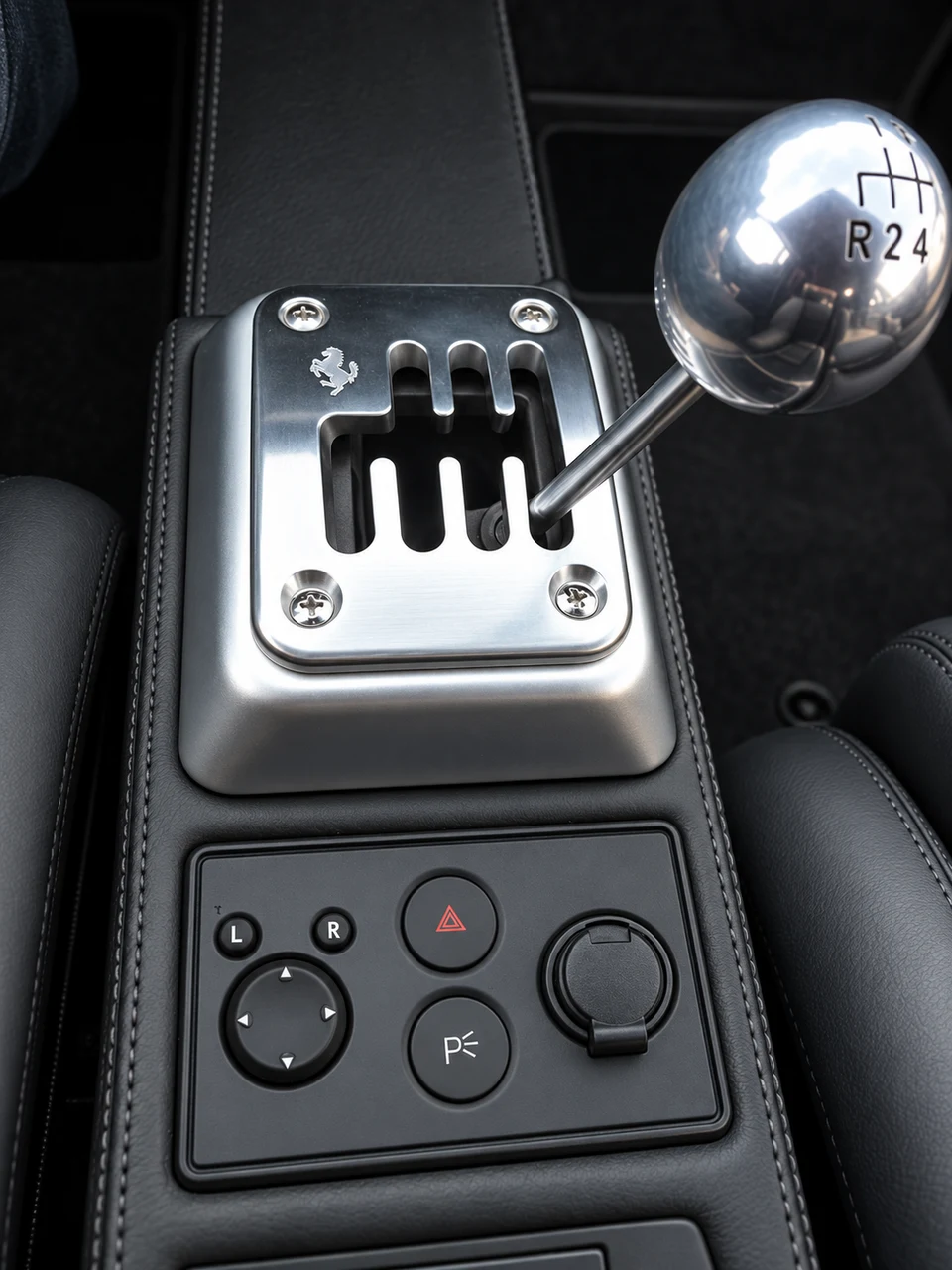
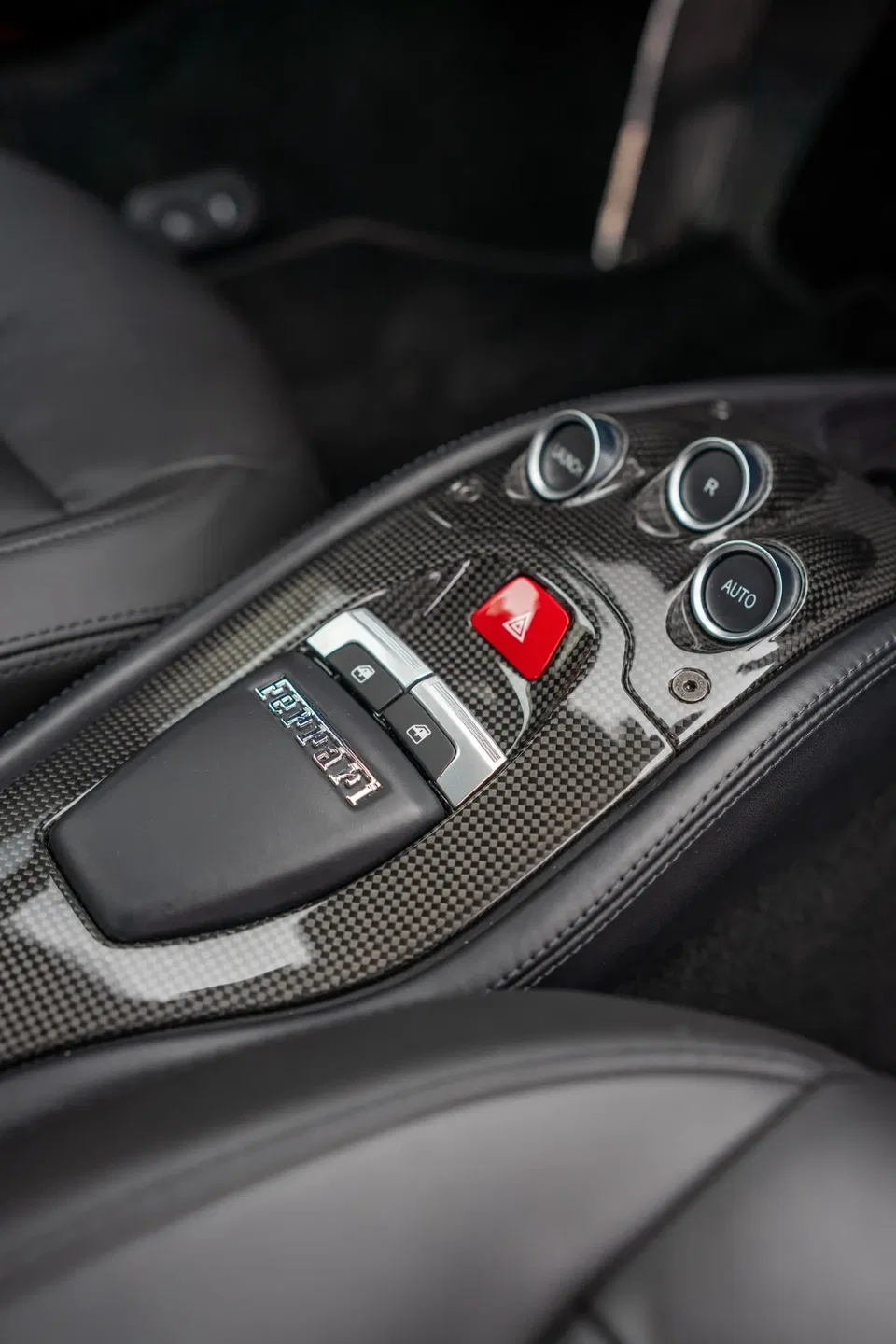
F430 vs 458 sound: character matters more than volume
Both cars offer the appeal of a naturally aspirated Ferrari V8. The 458’s high-revving character is central to its identity, but declaring one exhaust note objectively better would confuse taste with a specification. An F430 enthusiast may prefer its voice; we favour the 458’s combination of engine character and rapid gear changes.
Compare like with like when listening to videos. Exhaust modifications, microphones, engine load and recording position can change the impression considerably. Luxury Obsession’s 458 has a Capristo exhaust, so its sound should not be presented as a recording of a standard factory exhaust. You can explore the car’s equipment on our Ferrari 458 Italia page.
Driving and cabin: what matters on Swiss roads?
The gearbox is a useful everyday distinction; peak acceleration is much less relevant to a scenic itinerary. Neither car needs to be driven at its limits to make a journey feel special. For a first Ferrari experience, time to become comfortable with the controls is more valuable than chasing a performance figure.
- Controls: get familiar with the paddles, indicators and driving-mode controls before setting off. A modern cockpit still takes a moment to learn.
- Space: both are two-seat sports cars. Plan for the driver and one passenger, and check luggage arrangements before an airport pickup.
- Parking: allow room to open the doors and approach steep ramps carefully. Check the equipment on the actual car rather than assuming a camera or front lift is fitted.
- Route: choose a relaxed itinerary with time for stops. Our scenic drives from Zurich guide helps match a route to the time available.
These practical details explain why we recommend the 458 as a complete experience, rather than simply the quicker model. You still get a focused sports car, with a transmission that gives you flexibility throughout the day.
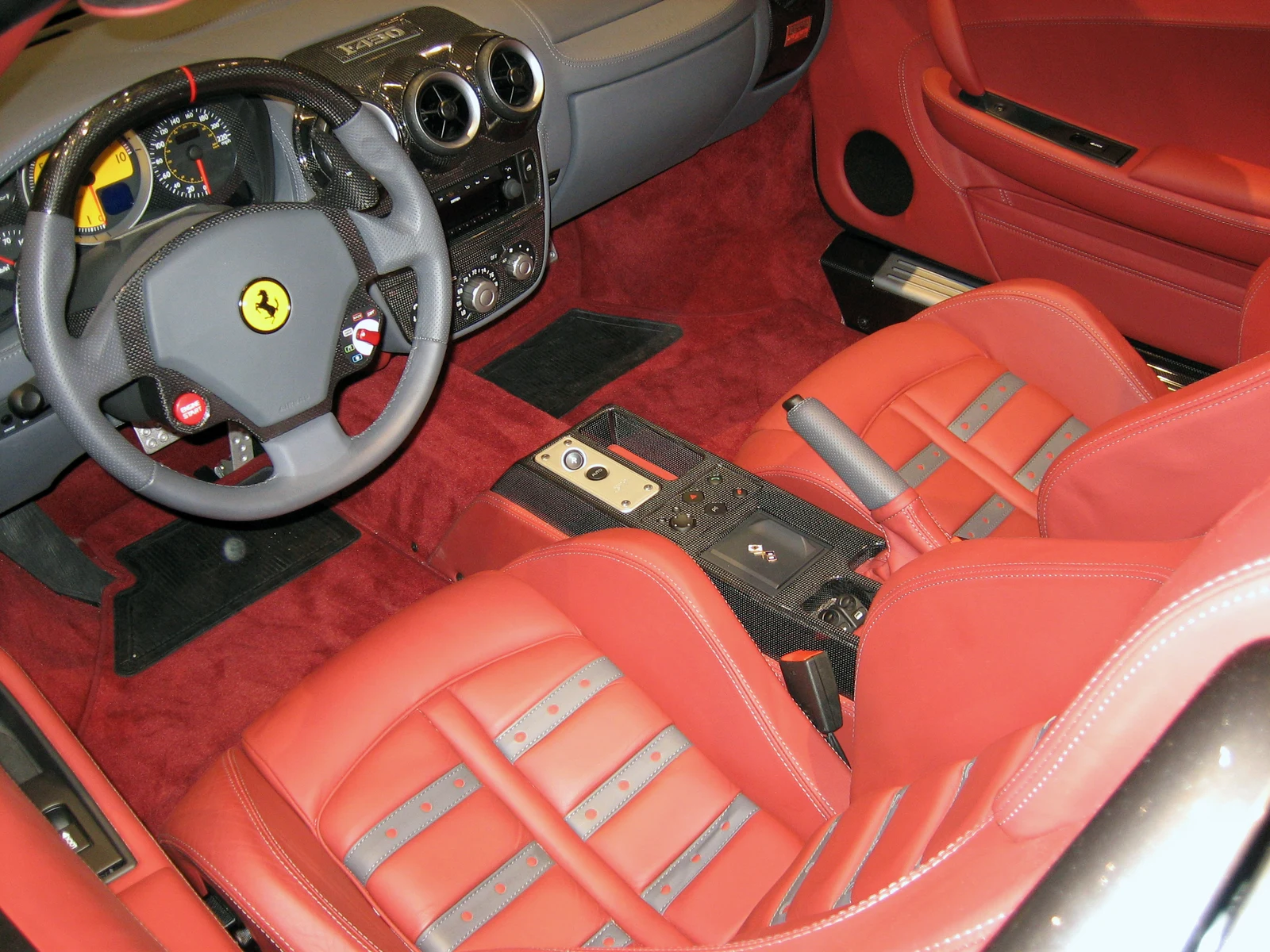
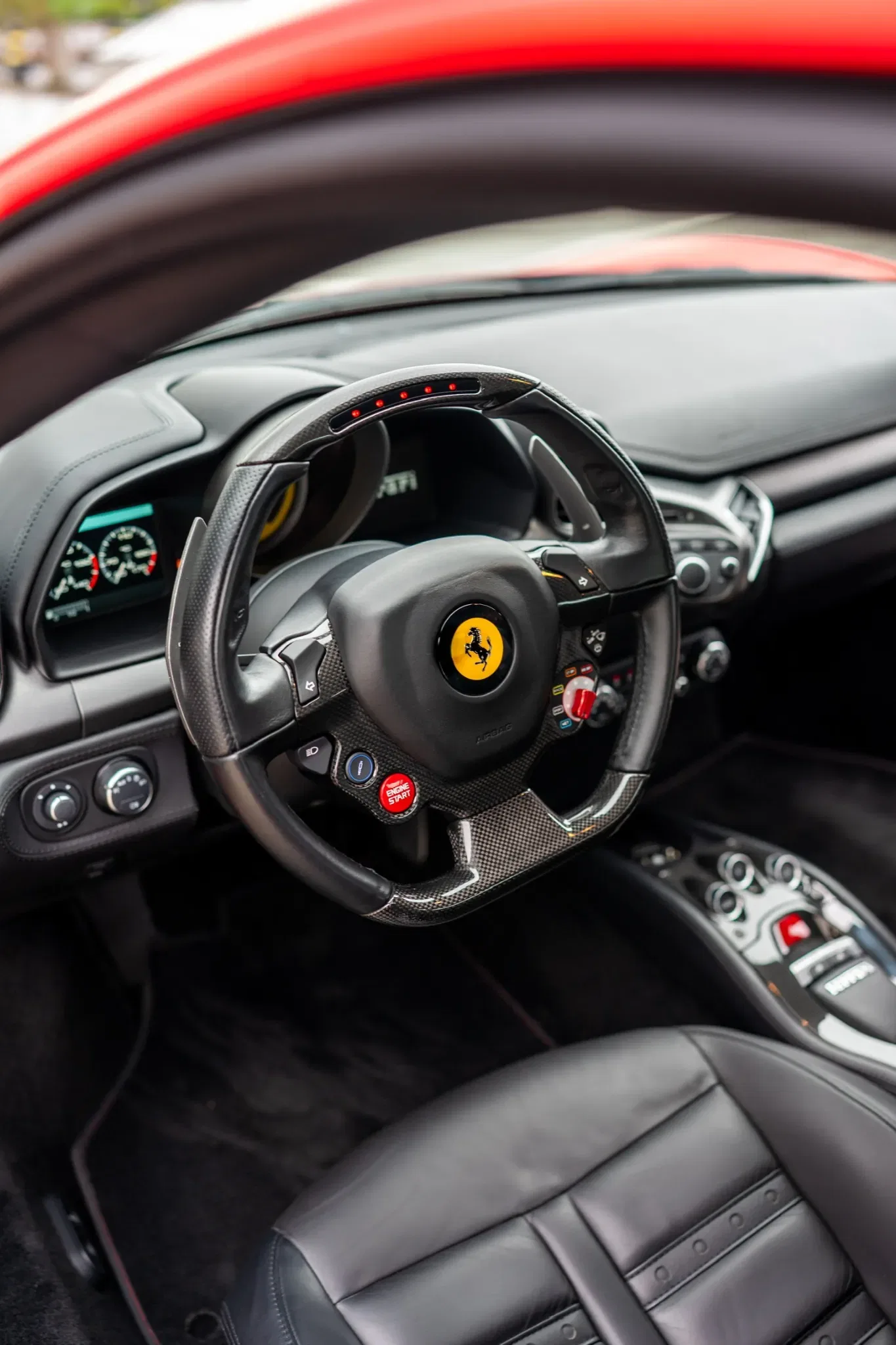
Cockpit and carbon-fibre details
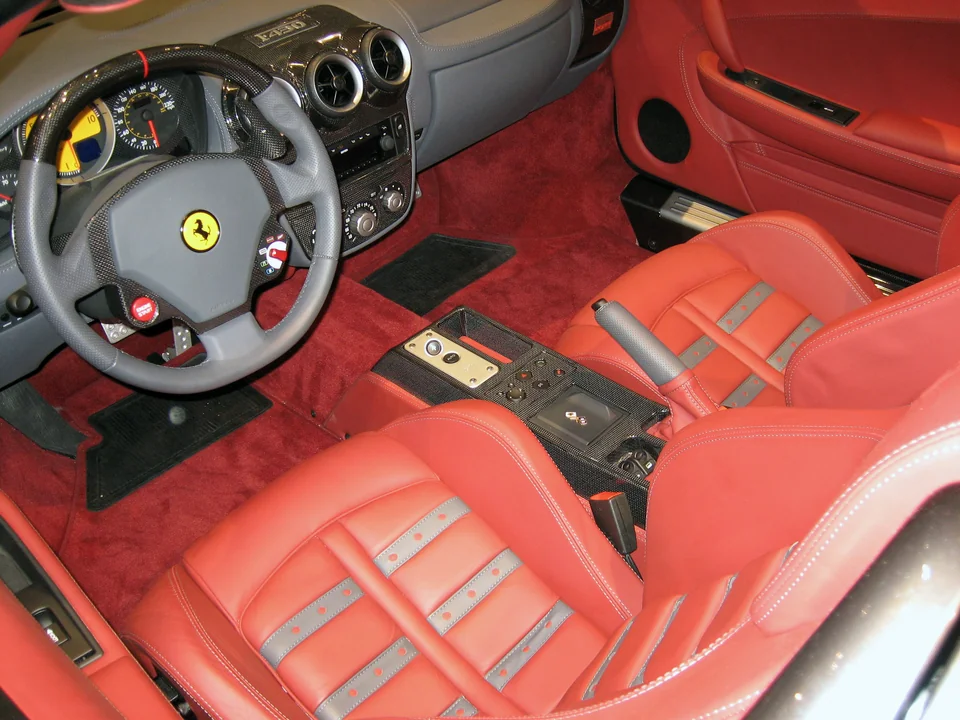

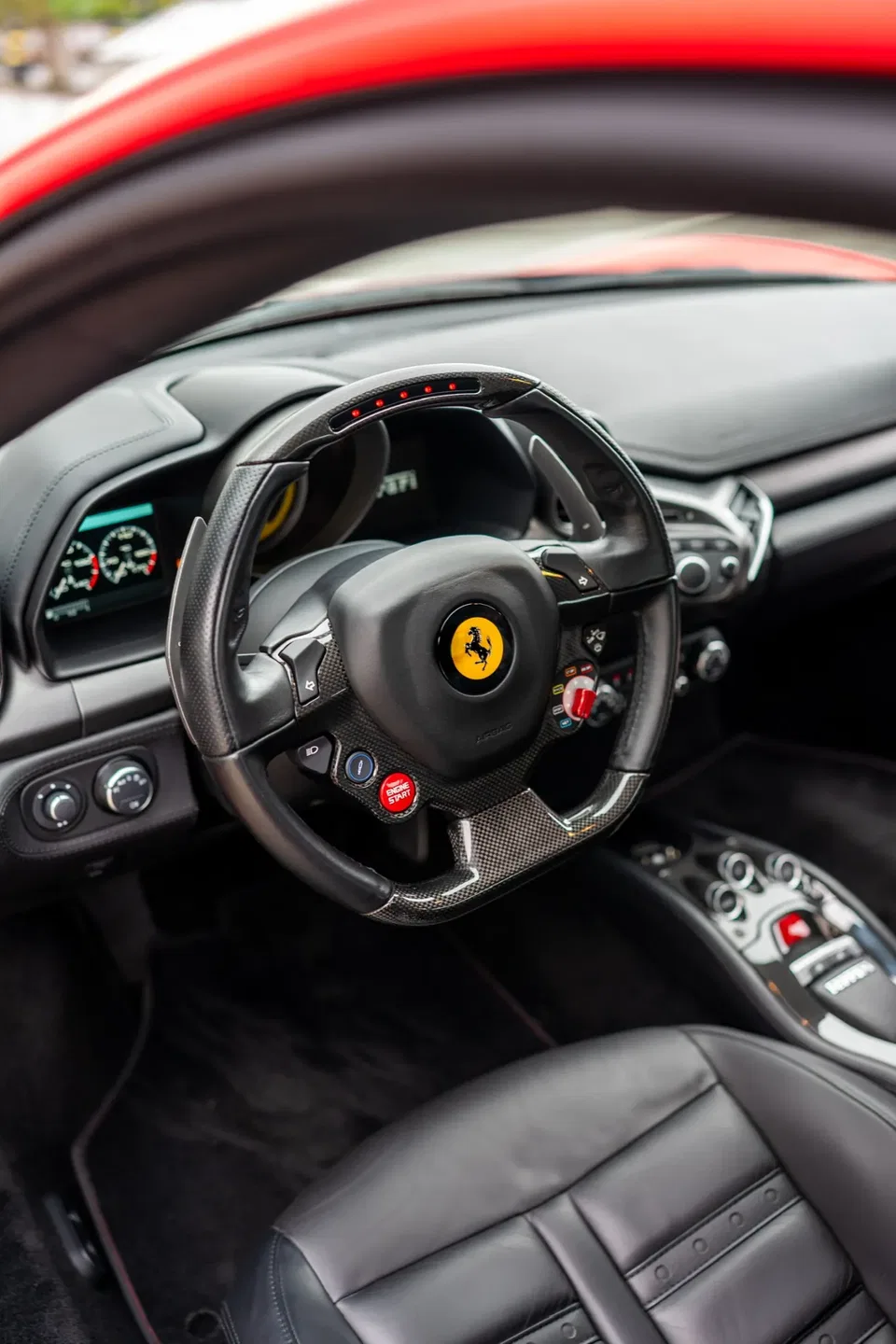
Steering wheels: controls within reach
Exterior: two generations of Ferrari design
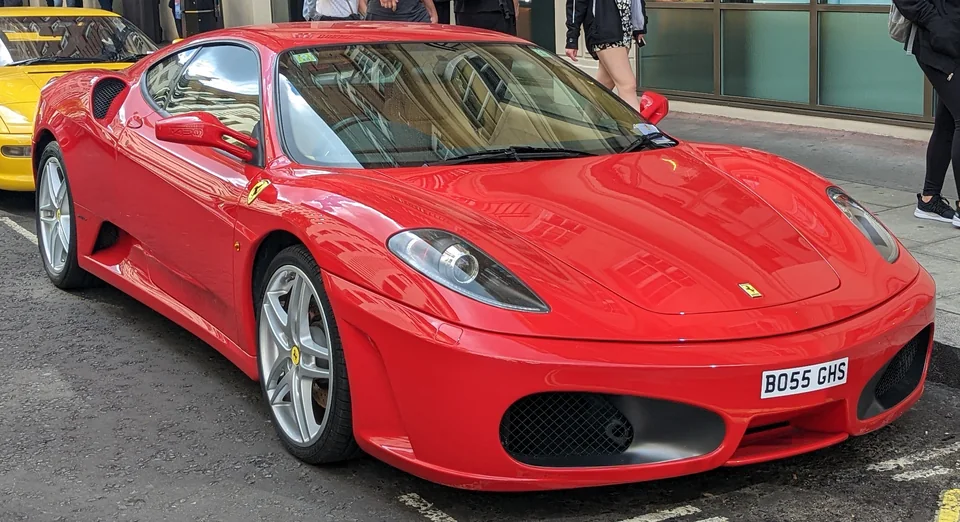
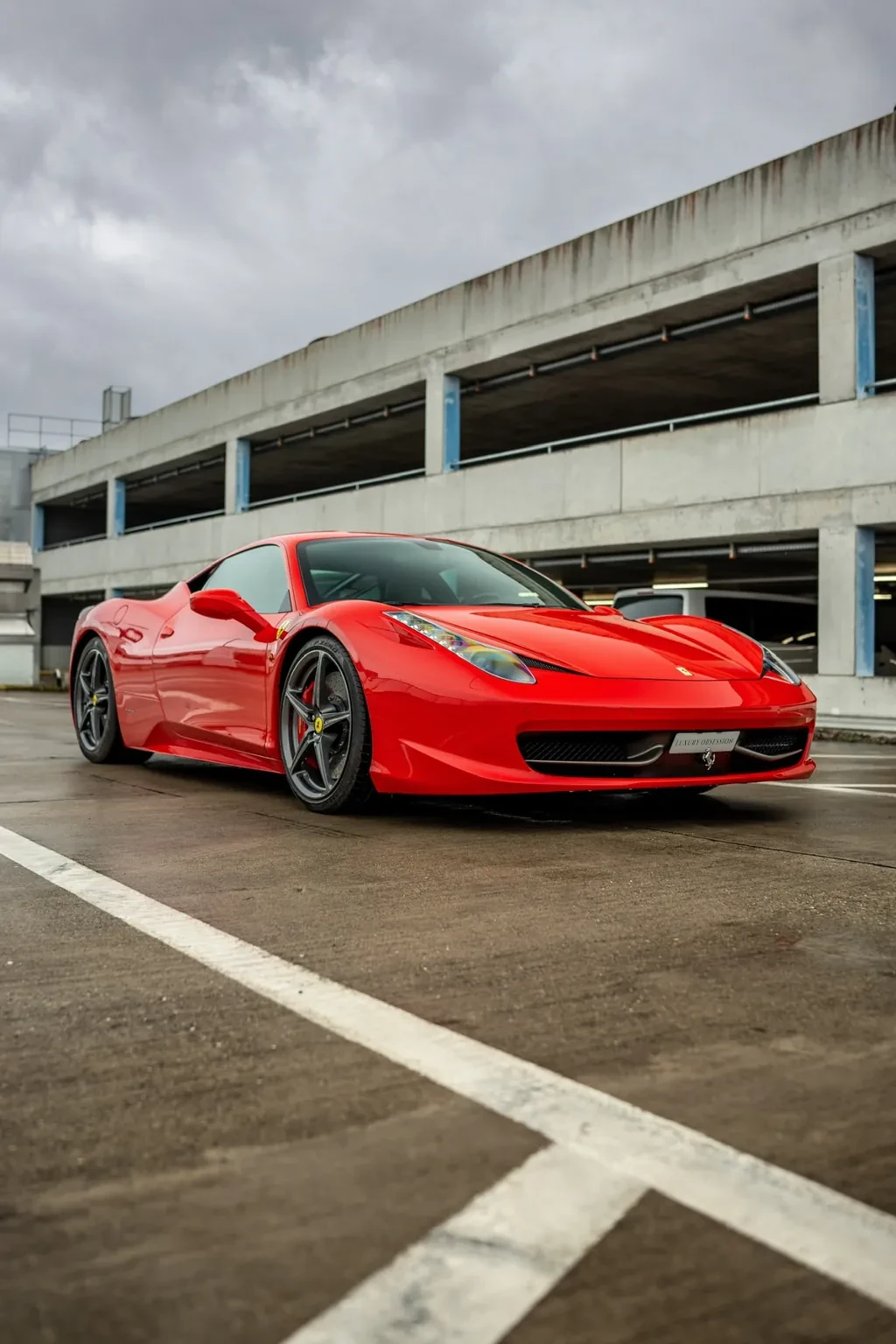
The F430 photographs illustrate different examples; trim and equipment vary.
Which Ferrari would we choose?
Choose the F430 if a gated manual and the appeal of an earlier Ferrari generation are your priorities. Its place in the comparison is not diminished by the arrival of a technically more advanced successor. For a manual enthusiast, the reason to choose it is specific and persuasive.
Choose the 458 Italia if you want the stronger combination of performance, paddle shifting and road-trip usability. That is our recommendation for a special driving day: it advances the formula in measurable ways while keeping the engine character that makes both cars desirable.
If you are considering ownership, this is not a prediction about maintenance bills or resale values. A particular car’s condition, history and specification require their own assessment. To compare the next generation, read our Ferrari 458 vs 488 guide.
Experience the Ferrari 458 Italia near Zurich
Luxury Obsession offers a Ferrari 458 Italia in Rosso Corsa, with pickup in Nänikon near Zurich. It is the car available to rent from us; the F430 is included here as a comparison. Explore the rental details and current rates below, then send your preferred date, duration and route so the package can be matched to your day.
Frequently asked questions
Is the Ferrari 458 the successor to the F430?
Yes. The 458 Italia followed the F430 in Ferrari’s mid-engined V8 range and was introduced in 2009.
Is the 458 faster than the F430?
Yes, comparing the standard coupés. Ferrari quotes 0–100 km/h in 4.0 seconds for the F430 and under 3.4 seconds for the 458 Italia. The 458 also has more power and torque.
Does the Ferrari 458 have a manual gearbox?
No factory manual was offered for the 458 Italia. It uses a seven-speed dual-clutch gearbox with paddles and automatic mode. The F430 was available with a six-speed manual or F1 automated manual.
Is the F430 F1 gearbox the same as the 458 gearbox?
No. The F430 F1 uses an automated manual with a single clutch; the 458 uses a dual-clutch transmission. Both have paddles, but their underlying systems differ.
Which is better for a first Ferrari driving day?
We recommend the 458 for its combination of a naturally aspirated V8 and flexible dual-clutch transmission. A driver specifically seeking a traditional manual may prefer an F430. Rental eligibility and the handover still need to be arranged for the actual car.