
The Ferrari 458 Italia and Lamborghini Huracán offer two compelling ways to experience a naturally aspirated Italian supercar. Both put the engine behind the seats, pair it with a dual-clutch gearbox and turn an ordinary journey into an occasion. Their differences are more interesting than a simple contest between badges.
Our preference is the 458: its high-revving V8, rear-wheel-drive layout and flowing bodywork are the combination we value for a memorable day in Switzerland. The Huracán makes an equally understandable case for drivers drawn to a V10, angular styling and, in the LP 610-4, all-wheel-drive traction. We rent a Ferrari 458 Italia, so our preference is explicit; the specifications below are manufacturer figures, while judgments about beauty and enjoyment are ours.
Ferrari 458 vs Huracán: which versions are we comparing?
This guide compares the standard 458 Italia coupé with the original Huracán LP 610-4 coupé. The Huracán family also includes rear-wheel-drive cars and substantially different EVO, Performante, STO and other versions. Their specifications and driving behaviour should not be treated as interchangeable. Likewise, the Ferrari figures here are for the Italia, not the Speciale.
| Specification | Ferrari 458 Italia | Huracán LP 610-4 |
|---|---|---|
| Engine | 4.5-litre naturally aspirated V8 | 5.2-litre naturally aspirated V10 |
| Maximum power | 570 CV at 9,000 rpm | 610 CV at 8,250 rpm |
| Drive | Rear-wheel drive | All-wheel drive |
| Gearbox | 7-speed dual-clutch | 7-speed dual-clutch |
| 0–100 km/h, factory claim | Under 3.4 s | 3.2 s |
Factory specifications describe the original models, not a test of two rental cars in identical conditions. Tyres, equipment, maintenance and weather all influence the experience.
Exterior and styling: flowing curves or sharp geometry?
The Huracán’s low wedge, sharply defined nose and angular light signatures create a strong visual identity. Its cabin appears tucked into the body, with a roofline that runs into the rear deck. It is an attractive choice if you like precise, geometric shapes and an unmistakable Lamborghini silhouette.
The 458 uses softer transitions between its nose, wheel arches and rear haunches. Long headlights and three central exhaust outlets give it distinctive details without dominating the overall shape. To our eyes, those proportions have aged particularly well. In Rosso Corsa, it brings plenty of occasion to a lakeside stop or hotel arrival while retaining an elegance we especially appreciate.
Exterior: two interpretations of an Italian supercar
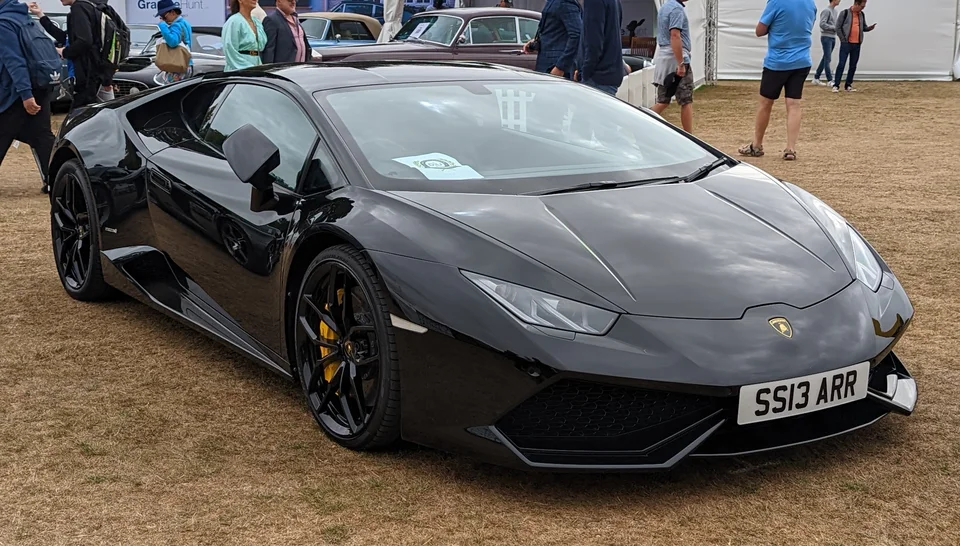

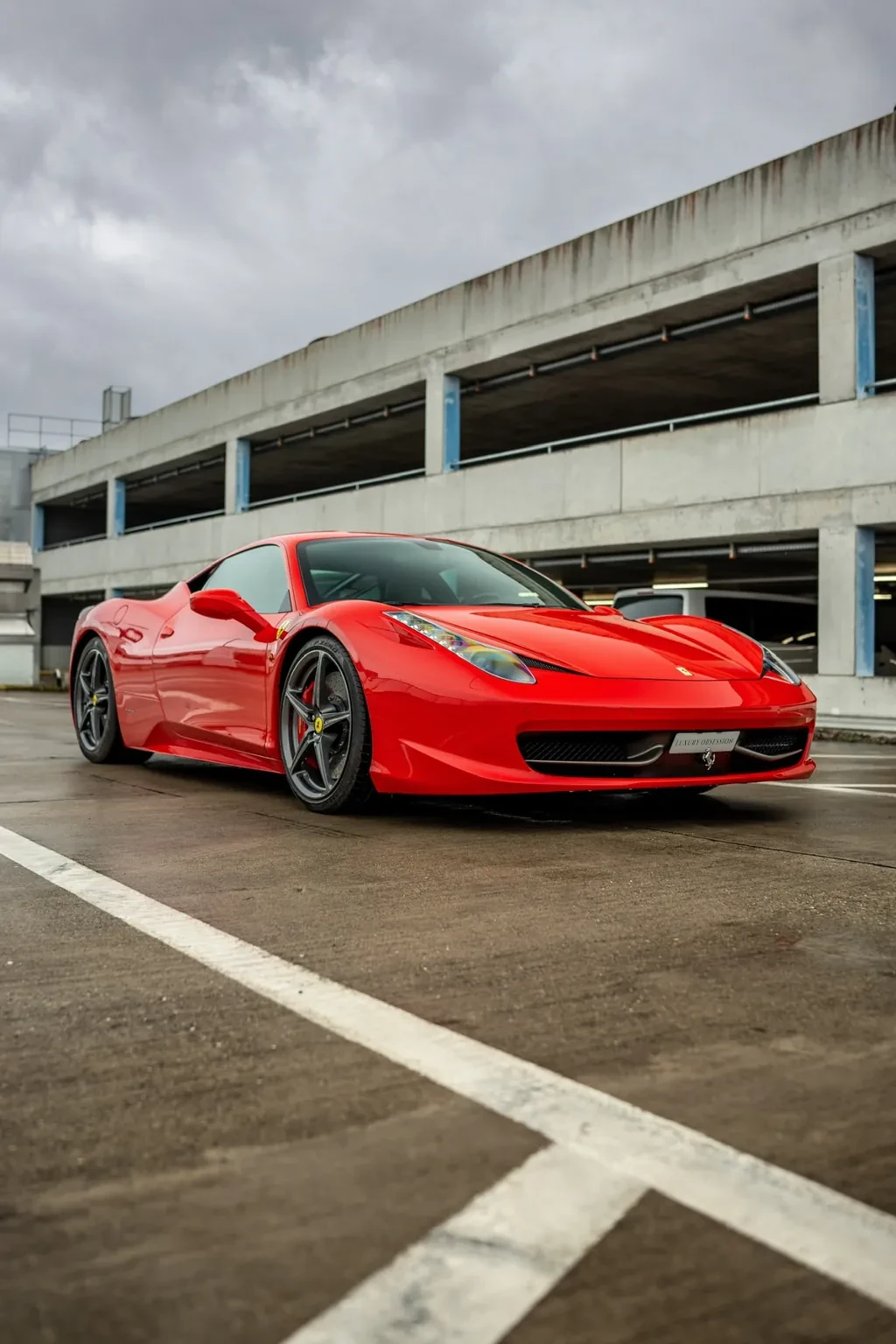
Neither design is objectively better, and paint colour changes the impression considerably. A dark Huracán can look restrained; a red Ferrari certainly attracts attention. The useful question is whether you prefer the Lamborghini’s angular architecture or the Ferrari’s more sculpted surfaces.
Interior: digital cockpit or a central rev counter?
The original Huracán has a configurable digital instrument display, geometric vents and a prominent centre console with a covered starter button. Its cabin continues the exterior’s design language. The digital presentation is a genuine distinction from the older Ferrari, rather than a reason to dismiss the Lamborghini as less involving.
The 458 places a large analogue rev counter at the centre of the driver’s view, flanked by screens. Indicators, the starter and the manettino are on the steering wheel. Our car combines black leather with carbon-fibre trim and a steering wheel with LED shift lights. We like the way this arrangement keeps the engine and driving controls at the heart of the experience.
Cockpit: instruments, materials and controls
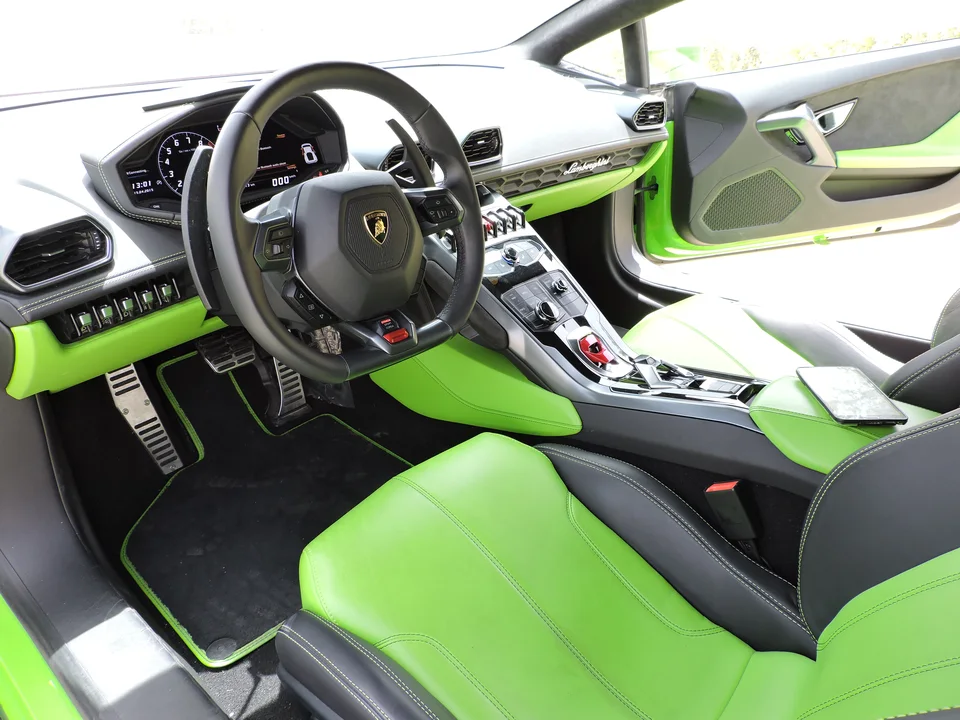

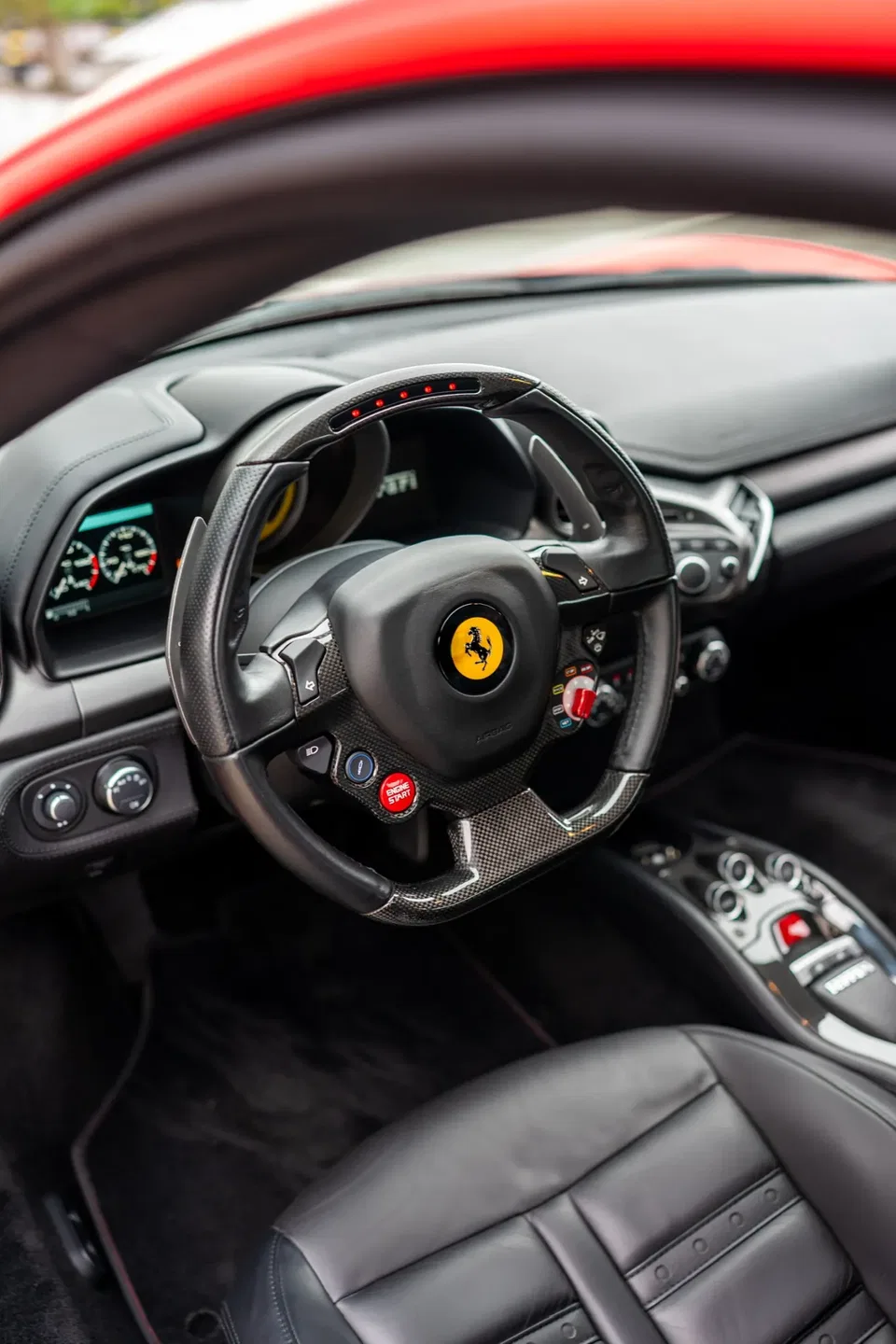
Both cabins need a little familiarisation. Steering-wheel controls are not automatically intuitive, and comfort depends on the seats fitted and your build. Check the actual car rather than assuming every 458 or Huracán has the same upholstery, seat options or equipment. The Huracán photographs show illustrative examples, not a vehicle available from Luxury Obsession.
Driving differences: V8, V10 and the driven wheels
The Huracán LP 610-4 has the power advantage: 610 CV against the 458’s 570 CV. Its published 0–100 km/h figure is also lower. That deserves straightforward recognition. But acceleration figures do not tell you which engine you will enjoy hearing, or which car you will want to spend a whole day with.
The 458 develops peak power at 9,000 rpm. For us, that high-revving V8 character is central to its appeal: the interest lies in the response, changing engine note and interaction with the paddles, not simply the maximum output. The Huracán’s 5.2-litre V10 offers a different voice and is a strong reason to choose the Lamborghini in its own right. Sound preference is personal, and exhaust specification matters; our 458 has a Capristo valve setup, so recordings of it are not a factory-exhaust comparison.
Both cars use seven-speed dual-clutch transmissions. Neither of these versions is a traditional manual. The key drivetrain distinction is rear-wheel drive in the Ferrari versus all-wheel drive in the LP 610-4. The Lamborghini can distribute drive between both axles, helping it deploy its power. The Ferrari’s layout appeals to drivers who value the character of a rear-driven mid-engined car.
That is not a claim that the Ferrari is always easier, or that the Lamborghini is less engaging. Steering specification, tyres and suspension settings matter, and a rear-wheel-drive Huracán changes this comparison. Both cars demand smooth inputs and respect for conditions. All-wheel drive does not make wet or cold roads risk-free.
What matters on a day around Zurich?
A Swiss supercar day includes much more than an open stretch of road: leaving town, passing through villages, parking for lunch and choosing stops with room to manoeuvre. Both cars are low, wide two-seaters with limited luggage space. Check ramps, parking access and luggage before setting off; neither badge guarantees an effortless fit in a tight garage.
For this kind of trip, our choice is the 458’s combination of design, V8 character and driver-focused cabin. You do not need to approach its limits to appreciate the seating position, the view over the front wings and the sense of occasion. A relaxed lake route can be just as memorable as a longer mountain itinerary. Our scenic drives from Zurich guide helps match the route to the available time and season.
Which would we choose?
Choose the Huracán if the V10 is your main attraction, you prefer its angular design or you specifically want the LP 610-4’s all-wheel-drive configuration. It is a compelling supercar with advantages that go beyond its appearance.
Choose the Ferrari 458 Italia if you want a high-revving V8, rear-wheel-drive character and the more flowing styling of this Ferrari generation. That combination is why it remains our choice for Luxury Obsession. It does not have to win every performance statistic to be the car you would rather drive.
To plan your own experience, explore our Ferrari 458 Italia and current rental packages. Collection is in Nänikon near Zurich. We offer the 458; we do not offer a Huracán rental.
FAQ
Is the Huracán faster than the Ferrari 458 Italia?
The original Huracán LP 610-4 has 610 CV and a quoted 0–100 km/h time of 3.2 seconds; Ferrari quotes under 3.4 seconds for the 570 CV 458 Italia. These are manufacturer figures, not a same-day comparison. Other Huracán versions have different specifications.
Are all Lamborghini Huracáns all-wheel drive?
No. The LP 610-4 used here has all-wheel drive, but the Huracán family also includes rear-wheel-drive versions. Check the exact model before comparing driving characteristics.
Which sounds better, the 458 or the Huracán?
That is a matter of taste: the Ferrari has a naturally aspirated V8 and the Lamborghini a naturally aspirated V10. Exhaust equipment affects the sound. Our 458 has a Capristo valve setup, so its sound should not be treated as a standard-exhaust reference.
Which would you choose for a day in Switzerland?
Our preference is the 458 for its high-revving V8, rear-wheel-drive layout and flowing design. The Huracán is a strong alternative if its V10, angular styling or LP 610-4 all-wheel-drive configuration matters more to you.
Can I rent a Lamborghini Huracán from Luxury Obsession?
No. Luxury Obsession offers a Ferrari 458 Italia with collection in Nänikon near Zurich. The Huracán appears here for comparison, not as an available rental car.